Following are my personal comments on specific markets and issues. I chart markets for a hobby and my comments are the result. They are not recommendations to buy or sell anything and should not be thought of as such. They are for entertainment purposes only so enjoy.
Please remember, the following is pure speculation based only on my experience and chart patterns. "Every sunken ship has a room full of charts."
David Bruce Edwards
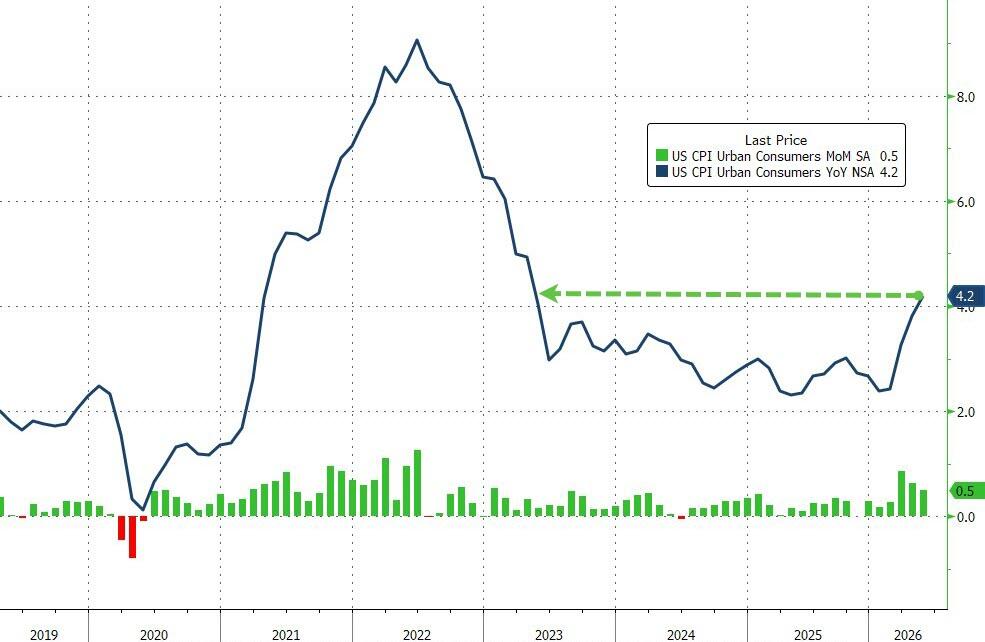
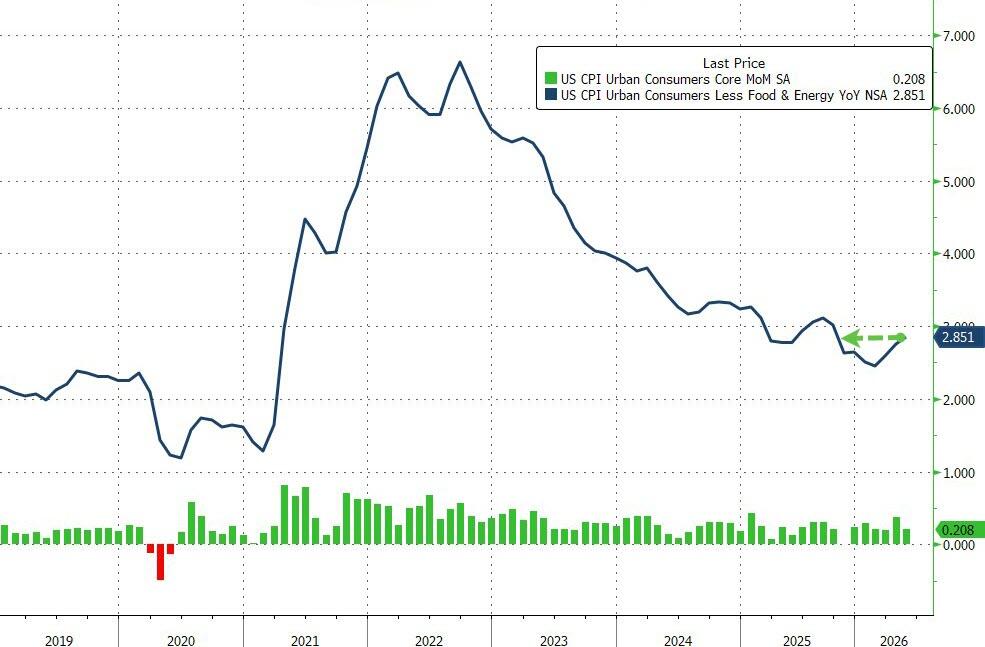
On October 14th, the government released the Consumer Price Index data for last month. Analysts said it would be bad and they were right. The headline reading (left) was up 0.6% for the month with over half the gain coming from higher gasoline prices. Among food items, meats, poultry, fish and eggs were down. The year over year rate of inflation hit 3.7%, far short of Biden type gains but bad for an administration that said it would bring down the cost of living. The Core number that subtracts food and energy was up 0.3% monthly and 2.6% for the year, slightly hotter than anticipated.
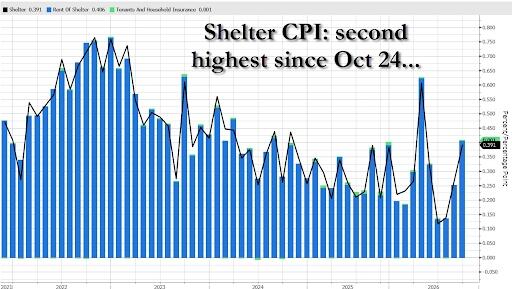
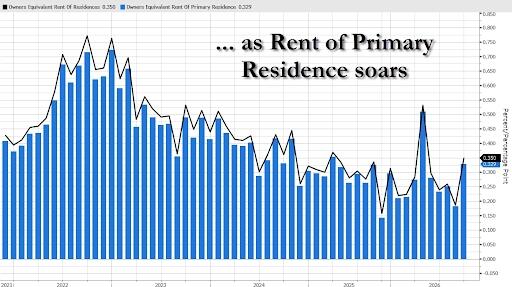
The Shelter component rose 0.4% with increases in rents to blame for most of it. There are lots of real estate analysts who are showing year over year decreases in rents in many cities and are critical of the government's statistics.
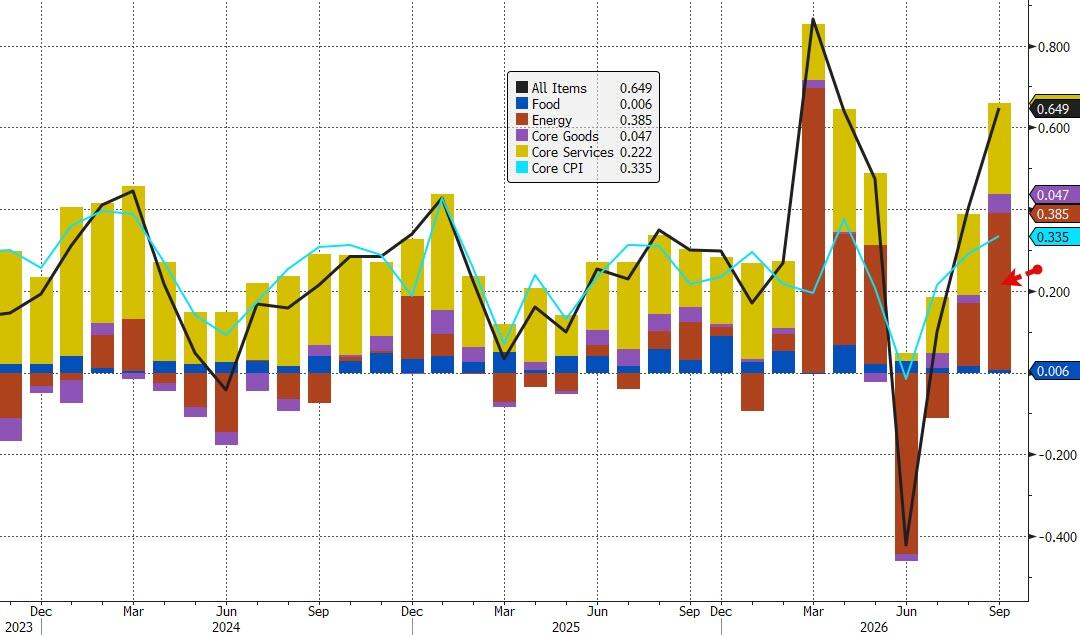
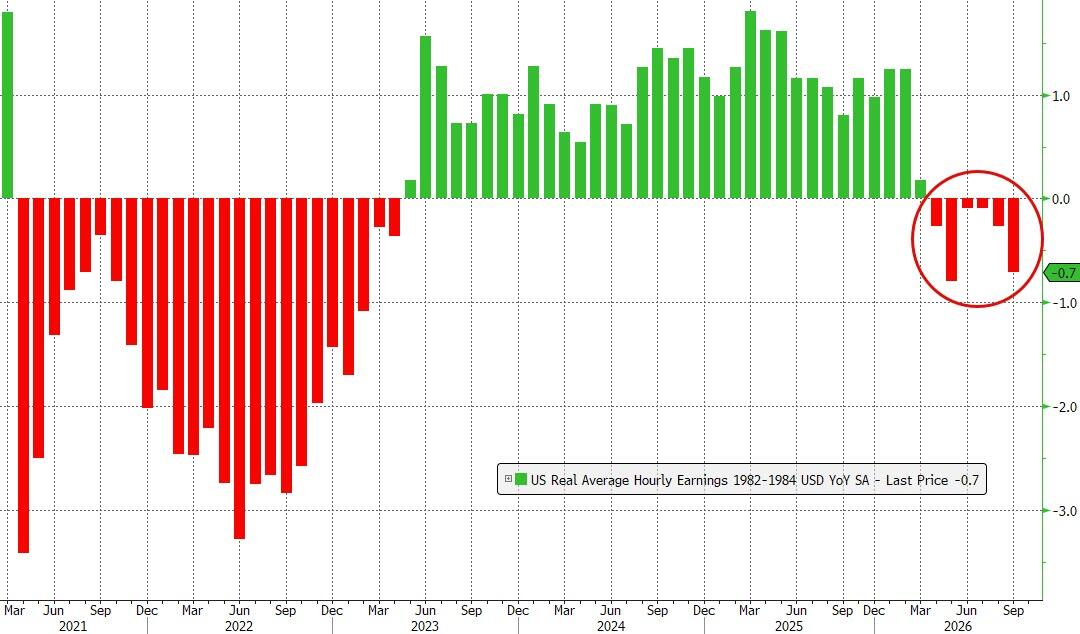
The red part of the bar on the upper left side graph shows just how much higher energy costs drove the inflation numbers. With costs in general rising faster than pay, real wages were negative again last month (right).
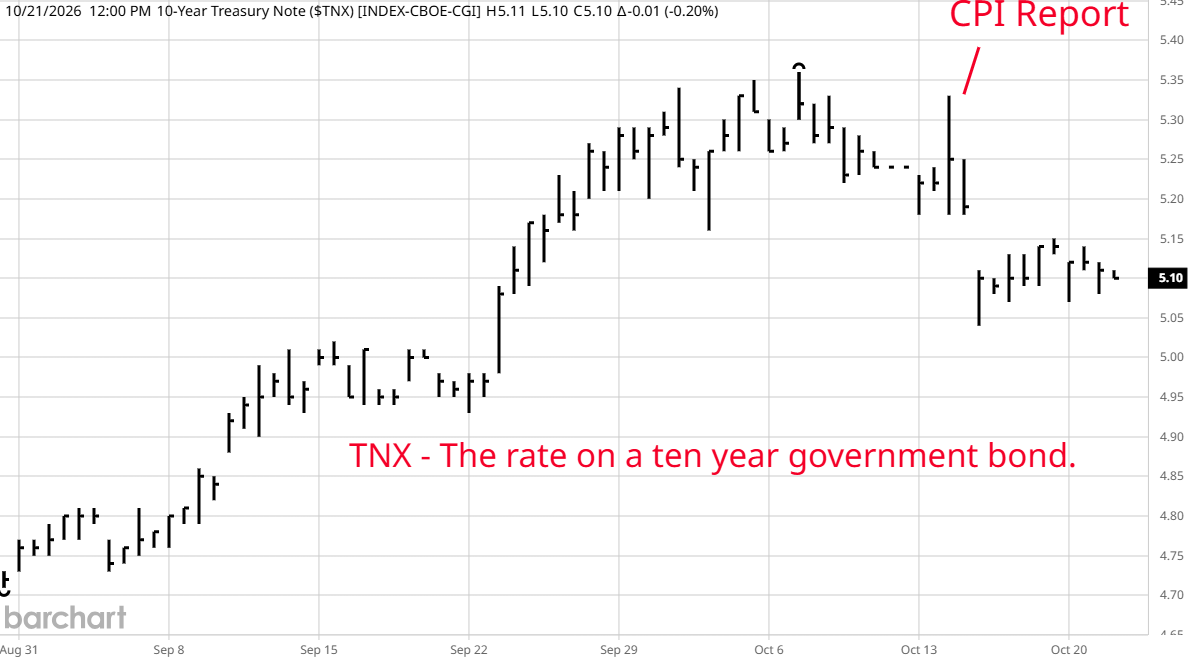
Interest rates dropped slightly going into the 14th. When the report hit, rates spiked for a few minutes then, contrary to all logic, they started falling. Analysts came up with creative theories for the drop. My experience is that when a market goes counter to the news, trust the market. Over time, interest rates on our 10 year mirror nominal growth. Are bonds saying that we just saw peak growth?

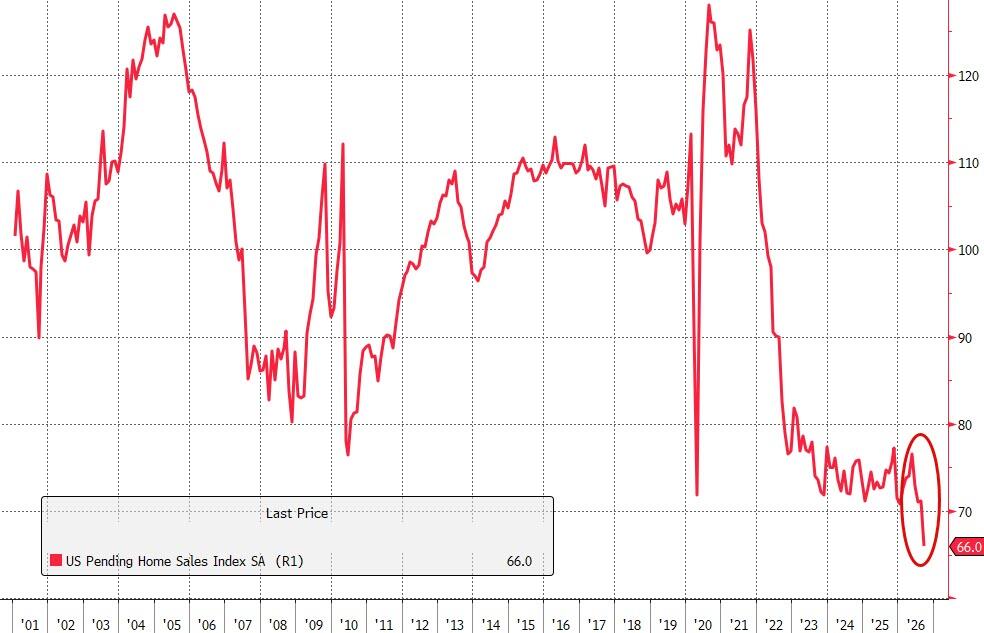
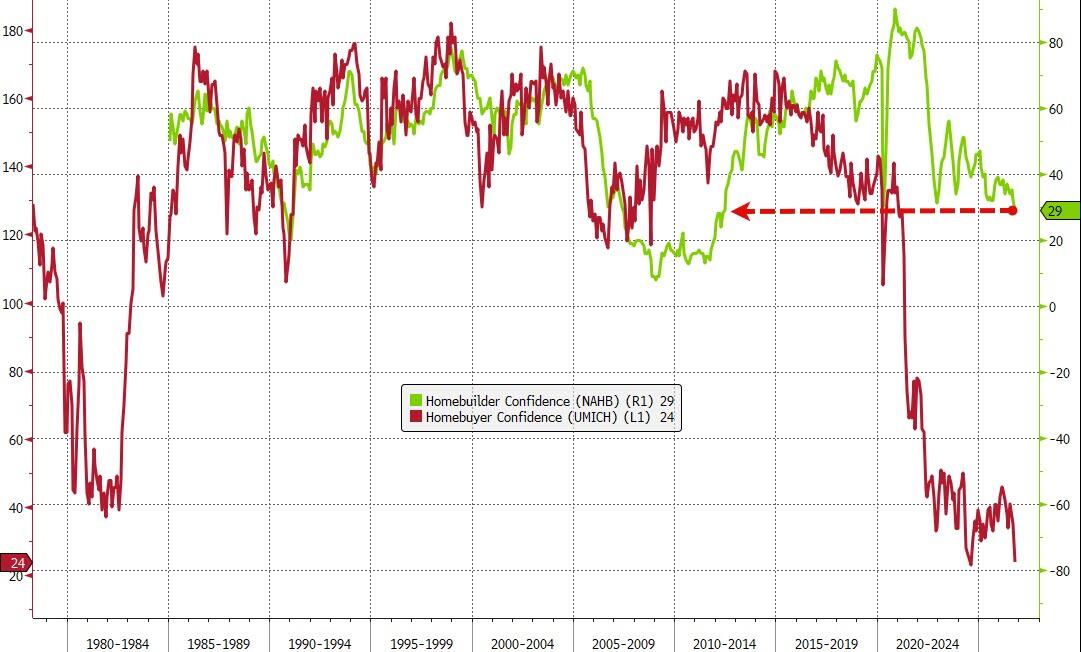
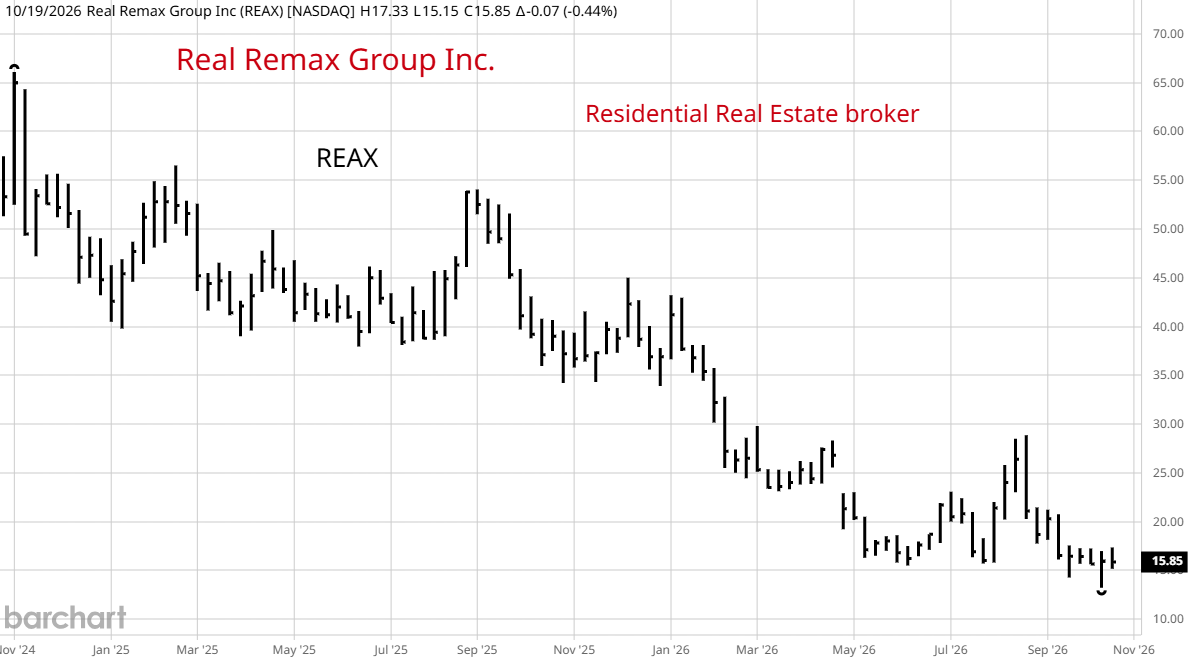
We got more terrible housing news. The upper left side graph shows the path of existing home sales. The market is frozen at a very low rate of transactions. Pending home sales (upper right) fell to new lows. The Pending rate will show up in future sales data. The lower left side graph shows readings on both home builder sentiment and home buyer sentiment (red) which is about as low as it gets. The lower right graph shows REMAX stock. When real estate is a hot item, you see REMAX "for sale" signs everywhere and anyone with time on their hands gets a broker's license. Markets exist to facilitate transactions by matching buyers and sellers. When a market freezes, it means that the price for the item is at a level that does not allow business to be done. My town is a good example. Last year, a national report called Beverly, MA the hottest real estate market in the country. Everything was selling above super inflated list prices. Last week, I got a monthly report from a local broker. Sales prices are even with asking prices and homes are taking 68 more days to sell than they did a year ago. Everyone blames mortgage rates. I blame the other side of the transaction. Sellers have unrealistic expectations for how much their house is worth. In many areas of the country, inventories of unsold homes are rising rapidly. It is just a question of time before the sellers cave. I am watching 2 houses near me. Both are in the 1,400 square foot range. One is priced at $700,000 and the other at $750,000. The more expensive one was renovated by the seller. Before COVID, you could buy a 3,500 square foot house in the same neighborhood for $750,000. A week ago, the less expensive one had a SALE PENDING sign attached to the For Sale sign. This week, the SALE PENDING sign is gone. If I am right, the next thing will be a PRICE REDUCED sign. REMAX is interesting because its current price reflects the belief that the residential housing market will be frozen forever. Warning: I am talking my book. I am trading in and out of REAX.
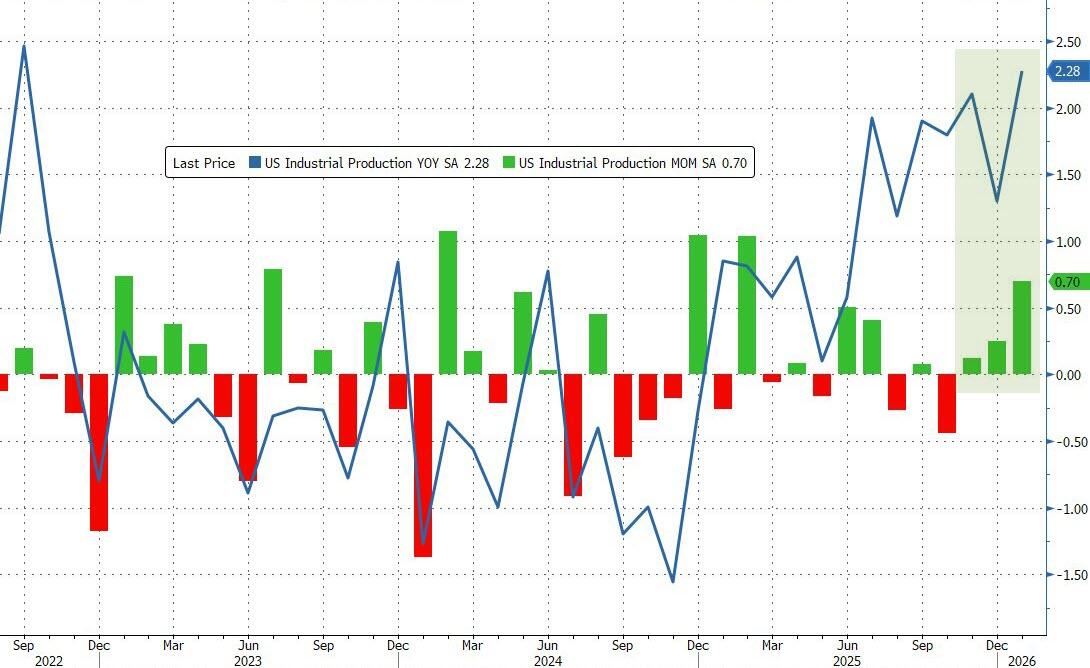
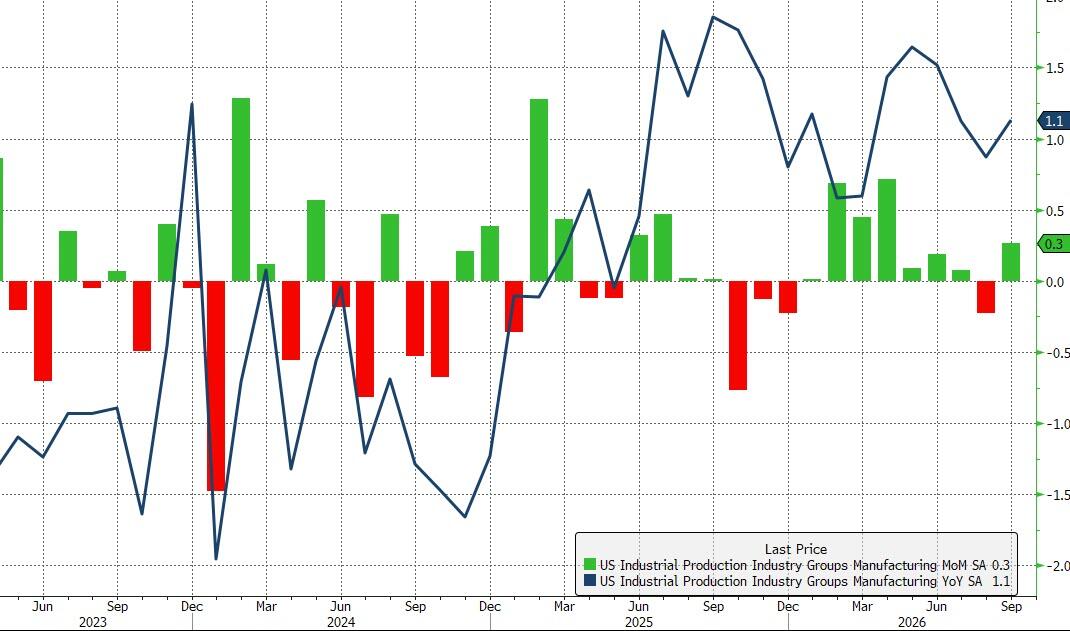
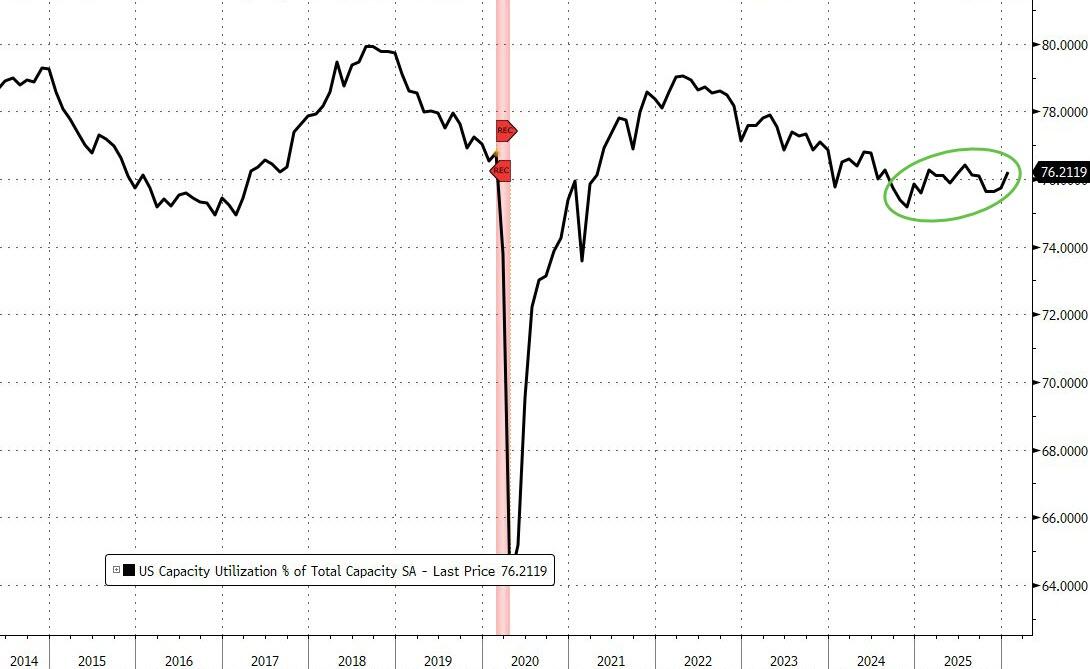
Industrial Production (upper left) was up 0.7% for the month and 2.25% for the year, hitting its highest rate of change since the post-COVID, zero interest rate rebound. Utilities (up 3.5%) and mining led the way. Manufacturing output was up 0.3% in September after falling in August. Semiconductors and computer components were the strongest segments. Capacity Utilization was up again but is still below its multi decade average of around 79%.
Record borrowing and spending by governments and hyperscalers is making its way through the economy.
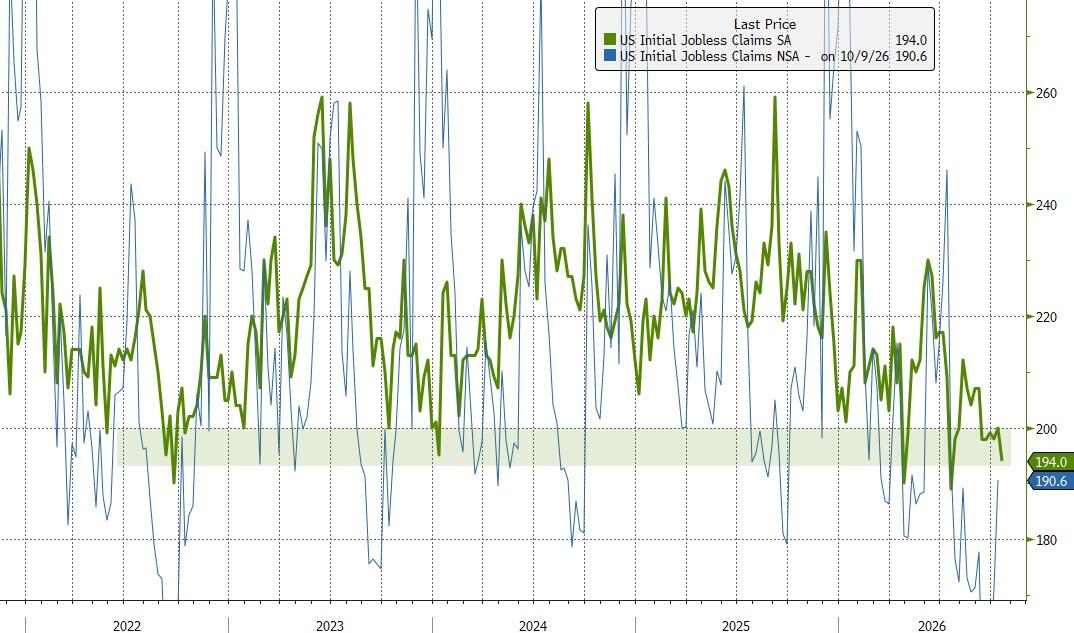
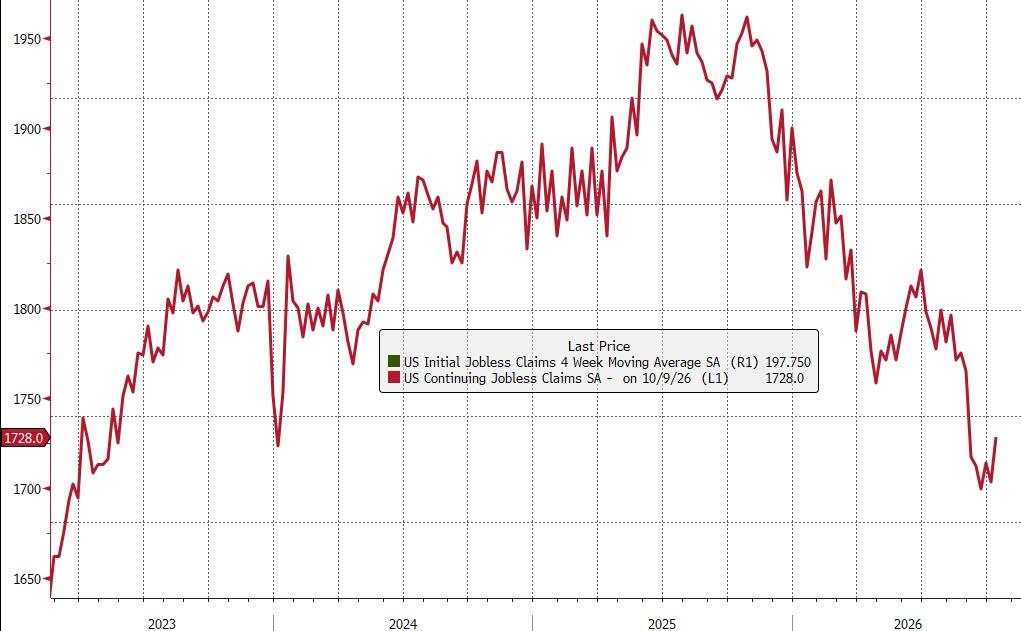
Initial Jobless Claims (left) filings hit 194,000 last week, expanding the string of minus 200,000 weeks. This is the lowest series of new claims for benefits in 60 years. Normally, this would be great news going into an election. Most of my friends in liberal Massachusetts don't even know that statistics like this are available. They are convinced that "things are bad" right now. Continuing Claims rose slightly to 1,728,000 and are still near the low end of their recent range. Analysts call it the "no fire, no hire" economy where finding a good job is hard and employers are hesitant to let workers go.
Last week, we finally got the AI crash.
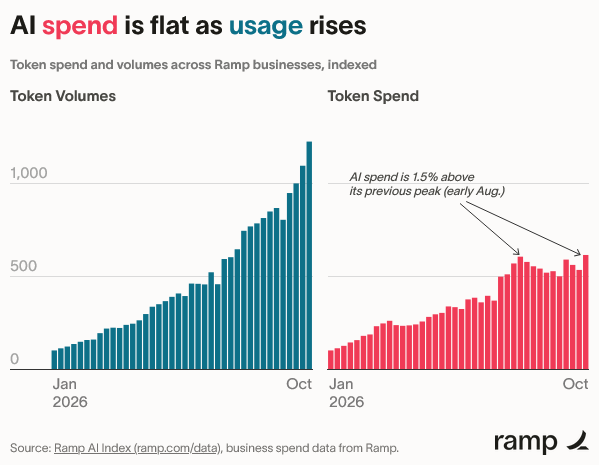
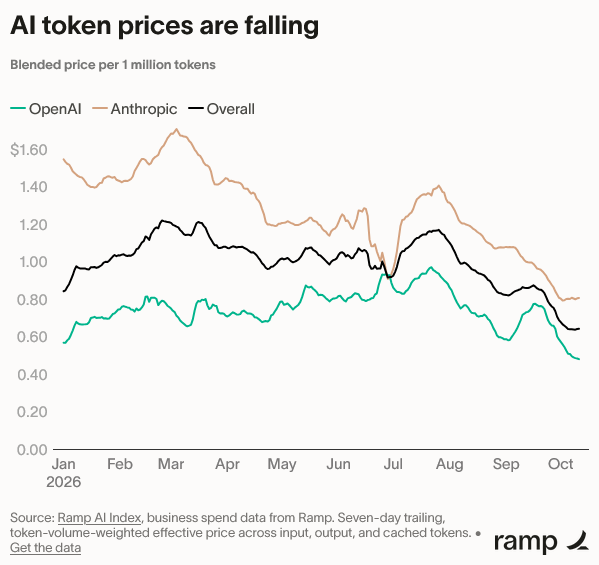
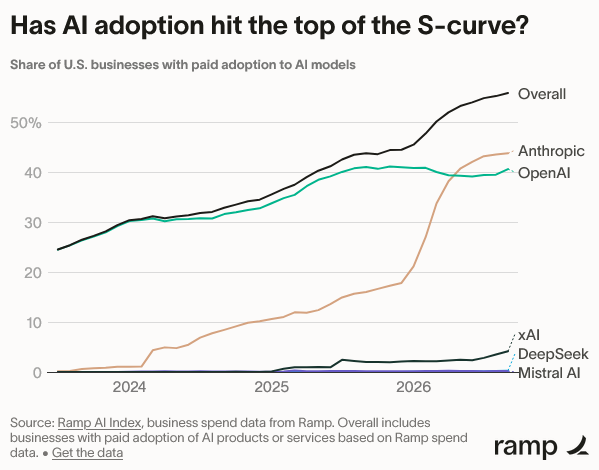
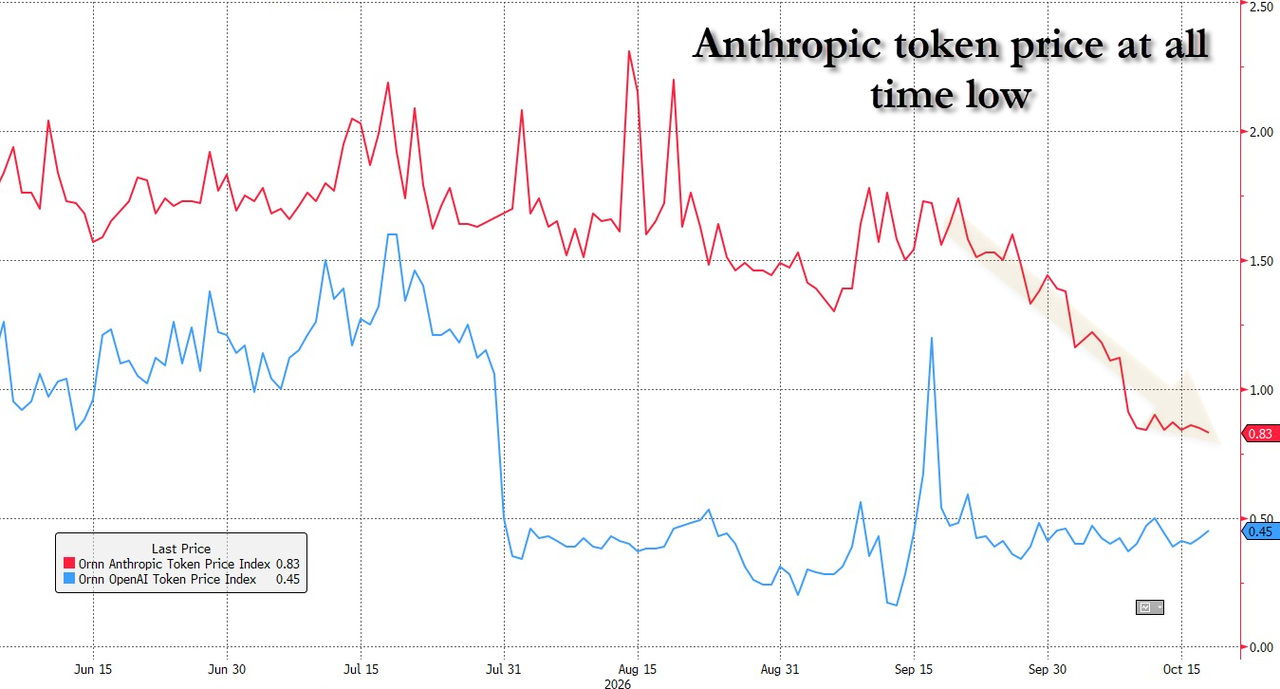
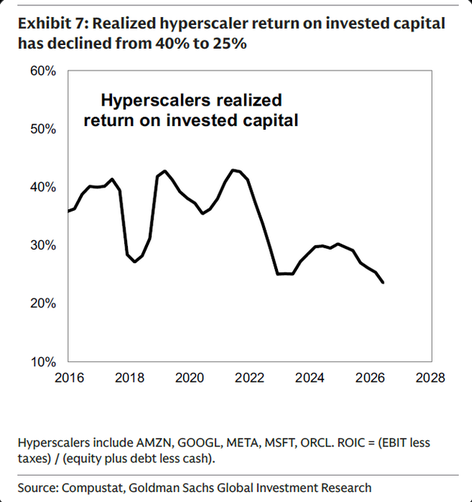
Long time readers will remember that I have been warning about the economics of the data center build-out for months. The above graphs show the problem. Token Prices, the unit of measurement for AI prices, have been dropping. Even though AI use is increasing, it is not keeping pace with the lower prices. With any new technology, prices tend to decline over time but the theory is that the unit volume will increase faster than deflating prices so that overall revenue goes up. So far, it isn't happening and especially with the two big frontier models, OpenAI and Anthropic that are burning through cash. The value of both these companies just got cut.
For the hyperscalers who thought they would have a monopoly on AI services, the way they did on SEARCH, Social Media and email platforms, the return gets lower by the week. At least a third of the planned data centers are running into problems and some of the existing ones don't have enough power to run at capacity.
The hyperscalers borrowed heavily and rushed to buy billions of Dollars worth of Nvidia and memory chips and now there is no where to plug them in. If they are not working, they are not earning money to pay for their purchase price. With no revenue coming in but current interest expense on their debt, every day generates negative cash flow. Last week, I featured a chart showing the rise in Credit Default Swap prices on that debt. It got even worse last week, to the point where the stock market could no longer ignore the math.
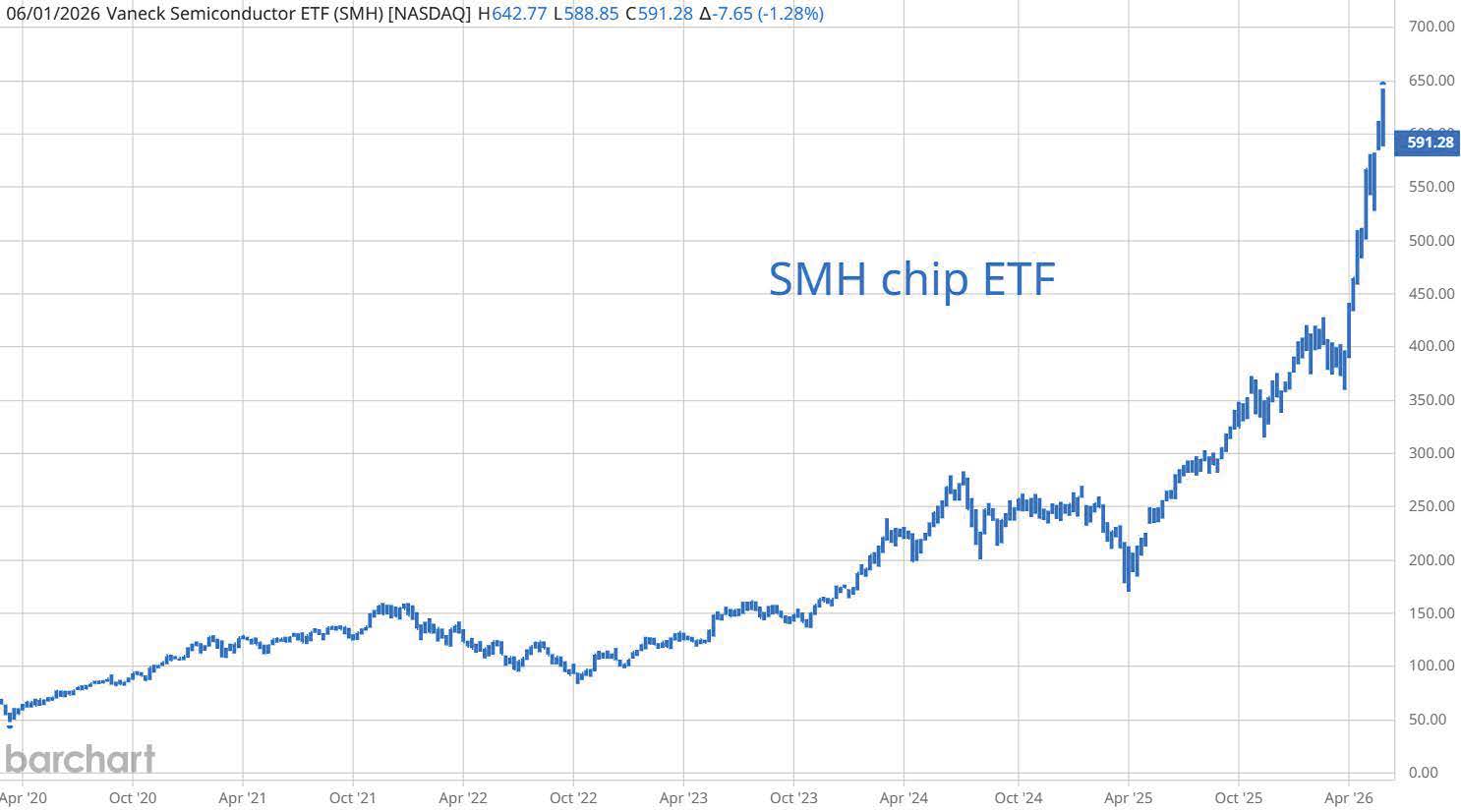
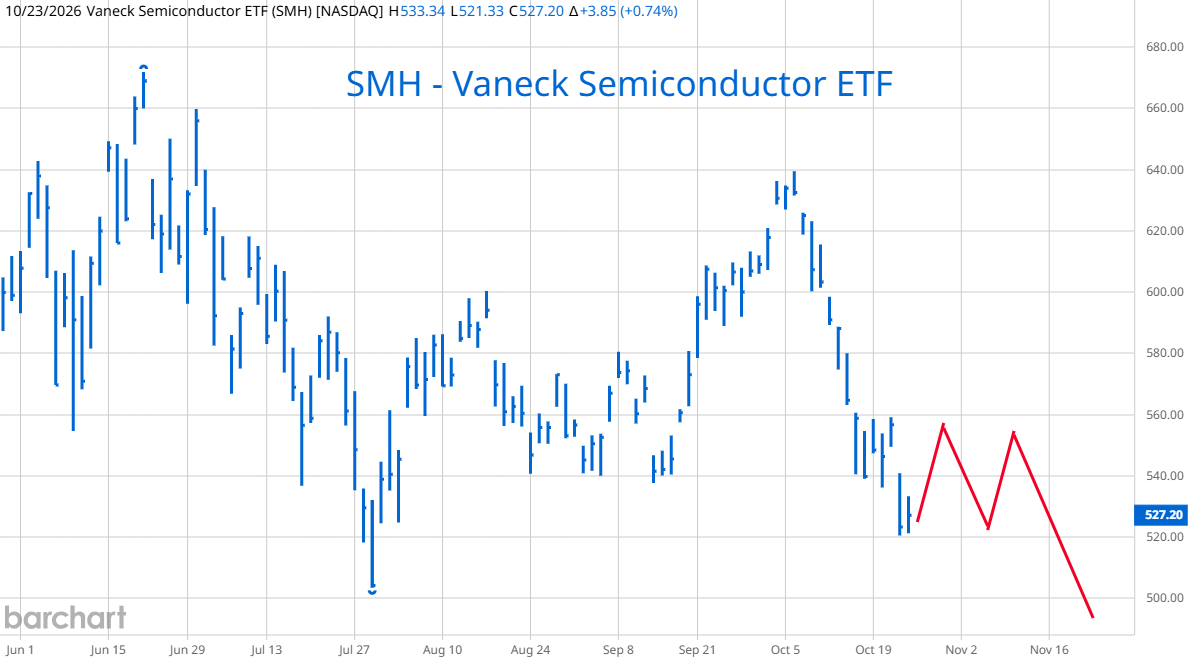
The upper left side graph shows SMH, the popular semiconductor ETF and a simple Relative Strength momentum oscillator. In August, when the oscillator fell into the 30 range, I included this chart in an update with the black rectangle to the left and suggested that traders who wanted to buy should wait until the red line hit black box territory. Well, here we are. The upper right, shorter term graph of SMH shows my idealized future path for the ETF. I will treat any bounce as part of a correction in an on-going bear market. Given the degree of the sell-off, an initial bounce could be larger than indicated by my red lines.
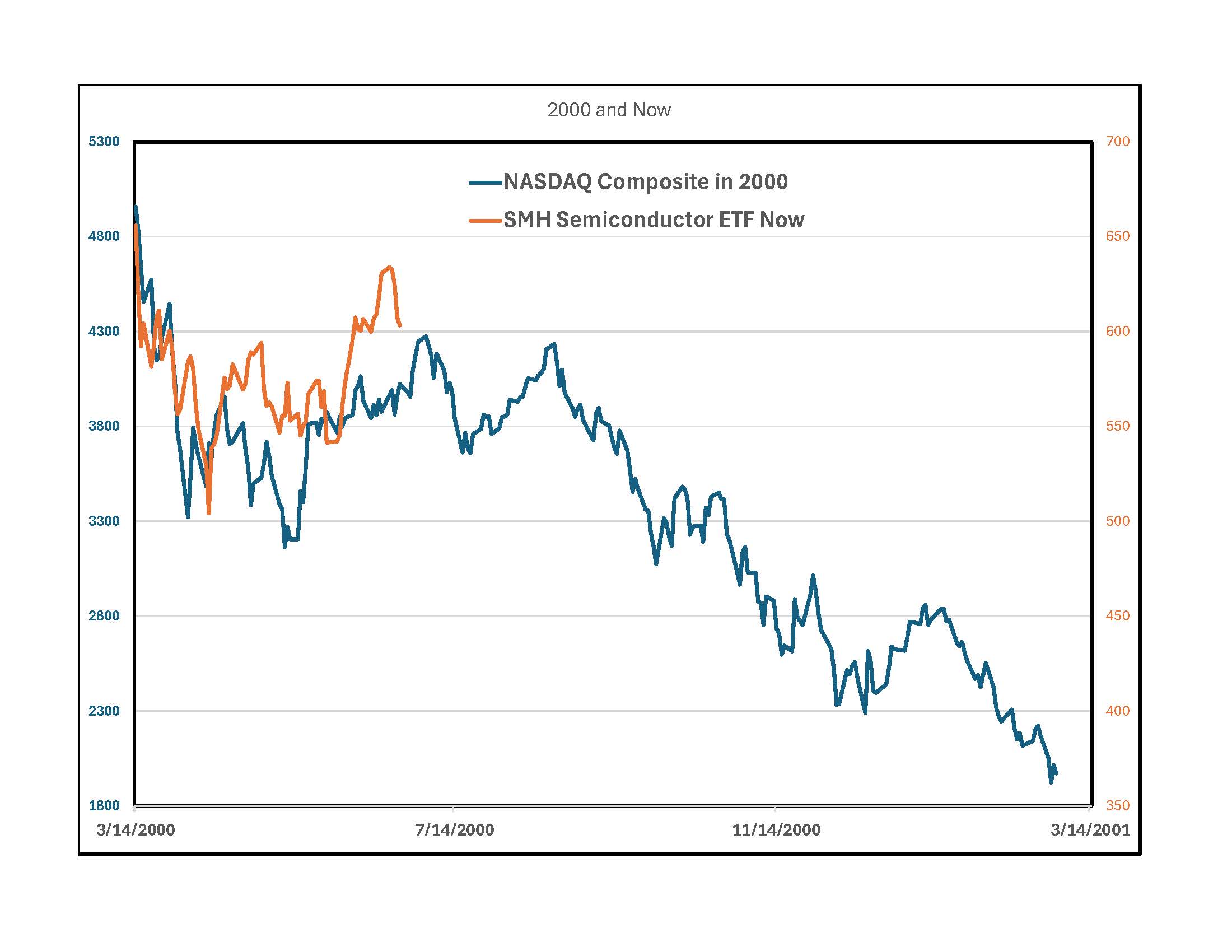
Computing advances make it easy to look for correlations with previous markets. To the right is a popular one. SMH is making ups and downs similar to the NASDAQ Composite as it topped in the year 2000. The inflection points are a bit early as shown by the blue rectangles. If reality follows art, SMH should be close to a low and a partial retracement of last week's plunge.
In the last 10 years, cycles and seasonal patterns gained a lot of attention and have become reasons unto themselves to buy or sell stocks, independent of what is happening in the economy or around the world. This fall's themes are - 1) The mid-year election cycle. Stocks tend to bottom shortly before election day then run higher into the next year. 2) Annual seasonal lows. In many years, stocks bottom in late September or mid to late October and have their best months into April of the following year. 3) The ten year cycle. Years ending in 6 tend to be flat with a low in the fall or early winter. These are followed by a robust rally into year 7, topping in year 8. Small and mid-cap stocks lead the way. 4) There are record corporate buy backs scheduled for the next couple of months that will lift share prices into the end of the year. Is there evidence for these cycles in the charts? It depends on what "market" you measure.
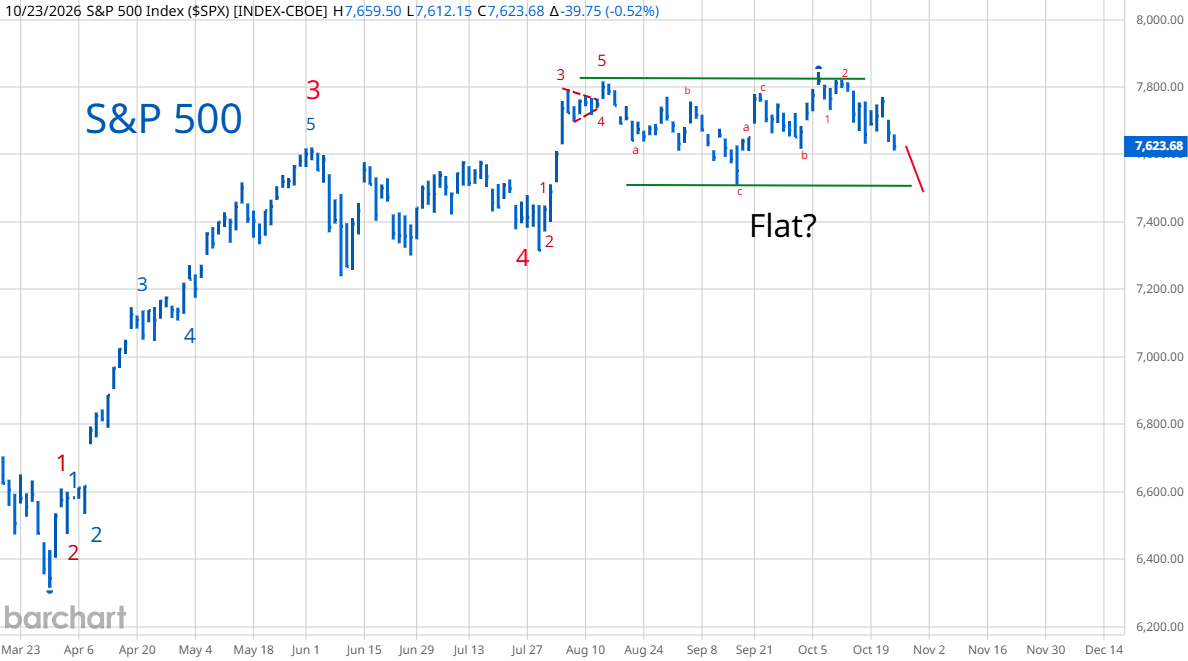
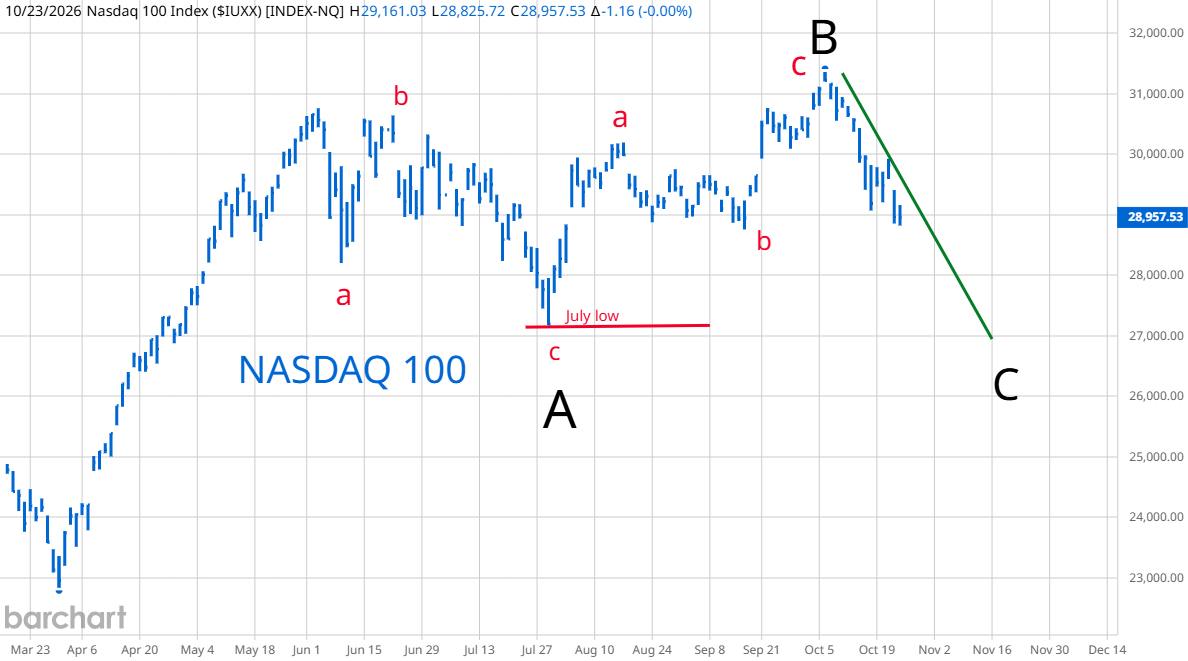
Because of the popularity of S&P 500 Index Funds in retirement accounts, the most heavily weighted stocks in the index have huge monthly inflows even if their fundamentals are deteriorating. This means that for every $100 you add to your 401K, Nvidia gets $7.34, Apple, $7.31, Microsoft, $5.61 and Amazon, $3.85. My best guess is that the S&P 500 is making a sideways correction before another up move. The index is heavily weighted with tech stocks that are all in on the AI trade, and it looks like a lot of the investment in data centers and chips is not going to have good returns. It could be that the S&P 500 stalls and this prompts people to switch their allocation out of S&P 500 Index funds into fixed income or another market segment. The NASDAQ 100 had a deep July sell off. I assume that the tech sell off has farther to go and the Index will fall below its July low. Both these chart mysticism interpretations go against the 4 themes, so I am not going to bet the farm on them.
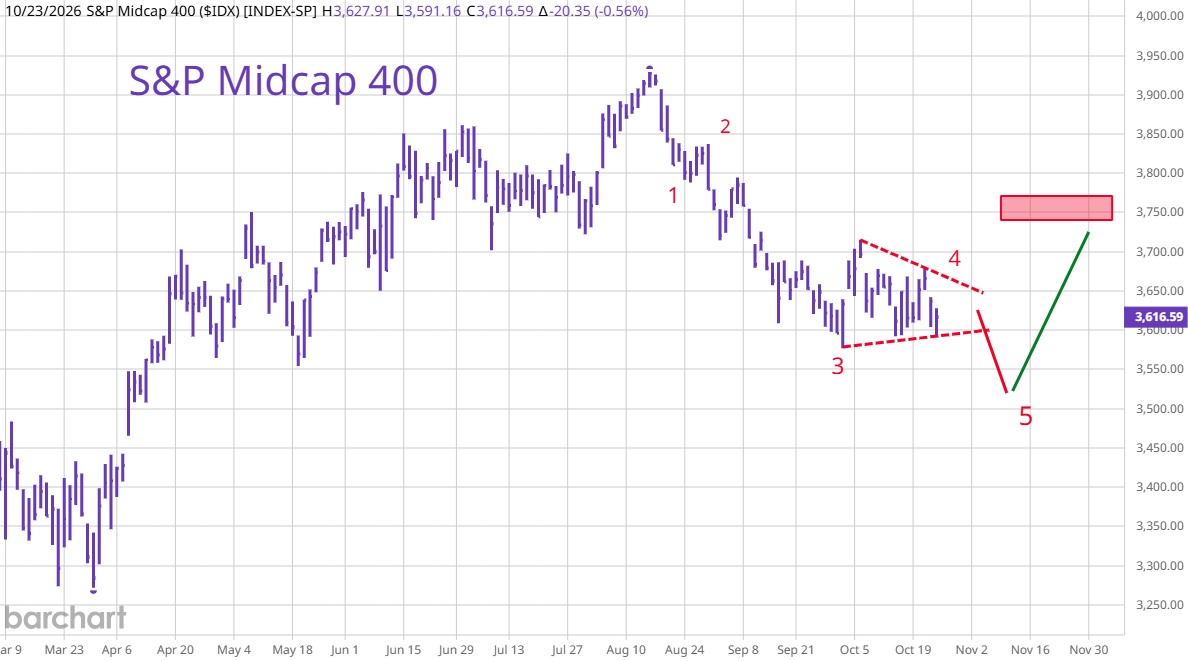
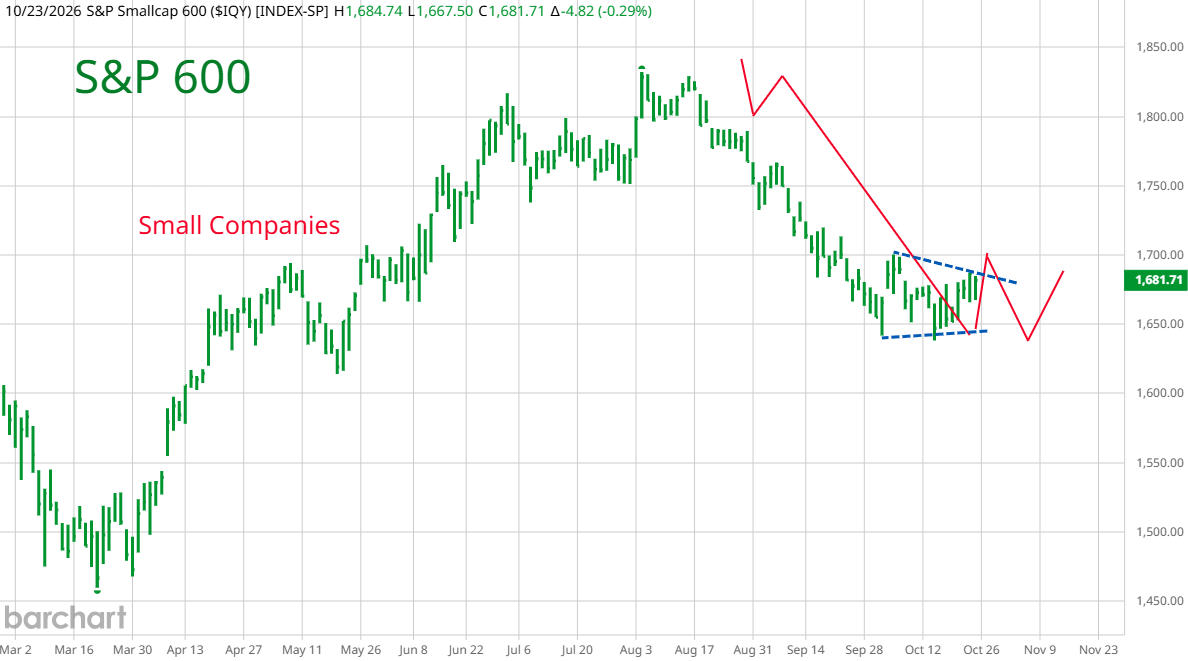
The mid-cap and small-cap patterns look worse. A chart wonk can make the case that we are in wave 4 of a five wave decline from the top. This implies that after 5, the market will have a strong rebound that takes back a large percentage of the sell off but does not make new highs. Again, this goes against the 4 bullish themes.

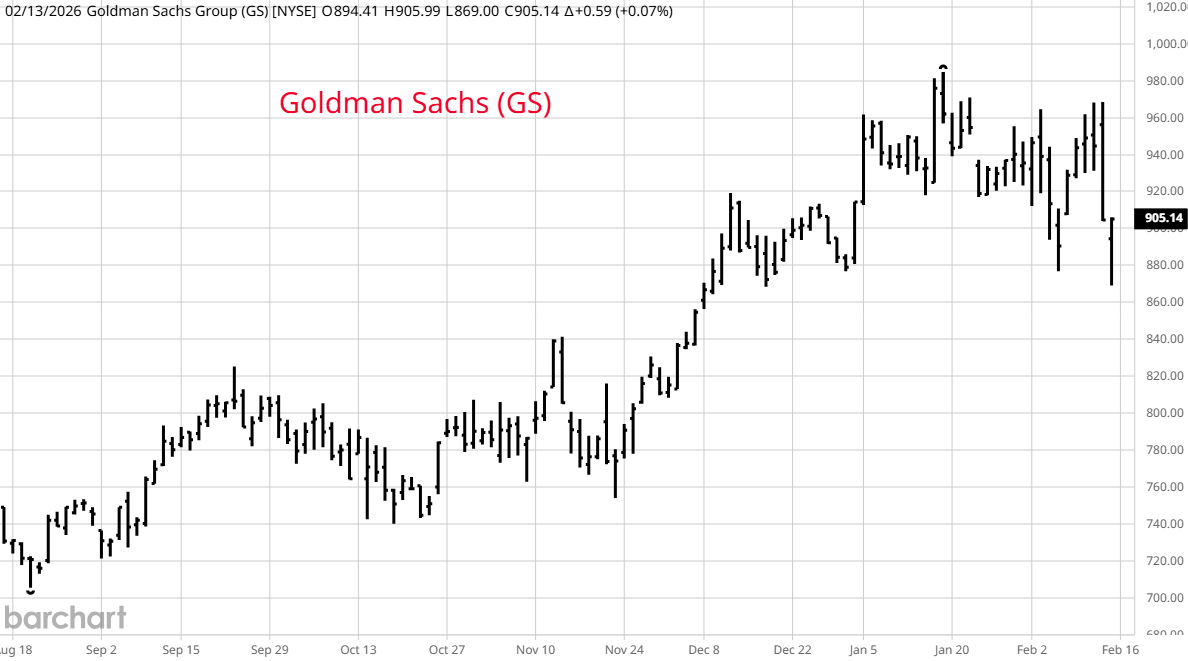
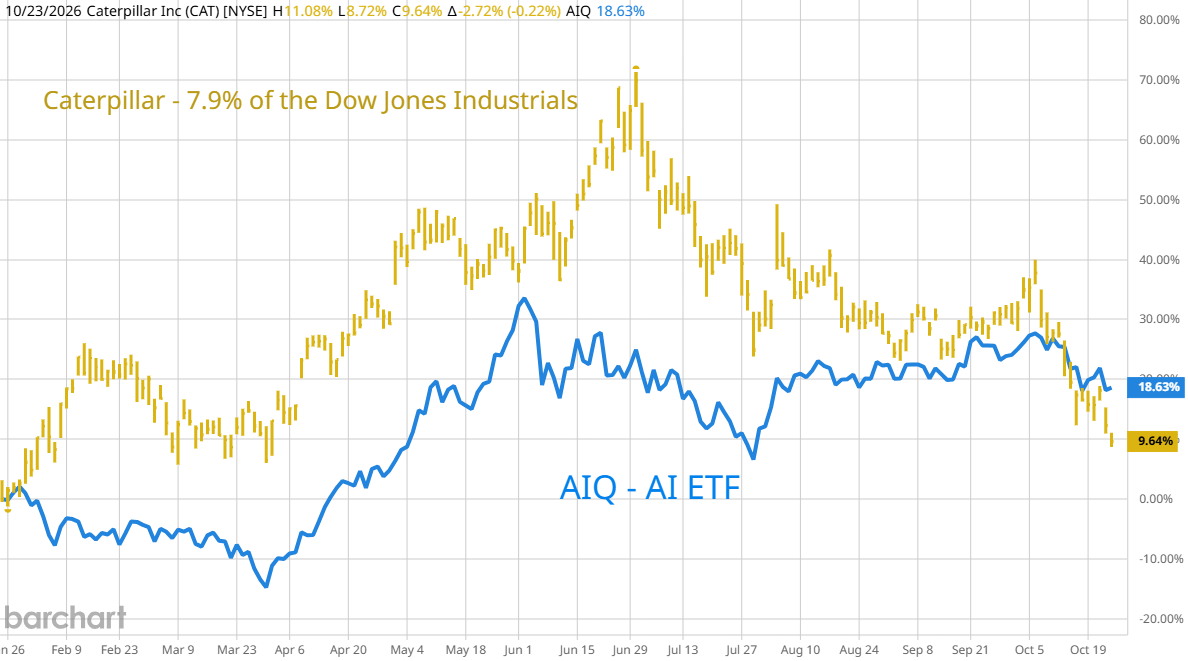
The Dow Jones Industrials held up well amid the tech rout until the end of last week. Goldman Sachs and Caterpillar account for nearly 18% of the Index's weighting and they have been trading with the AI story. This means that health care and consumer staples stocks, also in the index, held it up until investors reasoned that AI is the driving force behind the capital expenditure boom that is keeping the rest of the economy afloat despite higher prices for everything. If AI can't make money and the hyperscalers reduce cap ex budgets, a tide that is receding will lower all boats. An "over-sold" rebound in AI will help CAT and GS.
From a chartists point of view, the rally in the Dow Jones Industrials following the late September bottom features overlapping bars. Often, this is not a good look.
Again, this goes against the four themes. I subscribe to some of Martin Armstrong's material. He believes that as Europe moves closer to war, more and more wealth will flow into the U.S., the way it did before the wars in the last century which was one of the ingredients for the stock market that topped in 1929. He thinks much of it will find a home in Dow Jones Industrial stocks which will help this Index out-perform other market measurements.
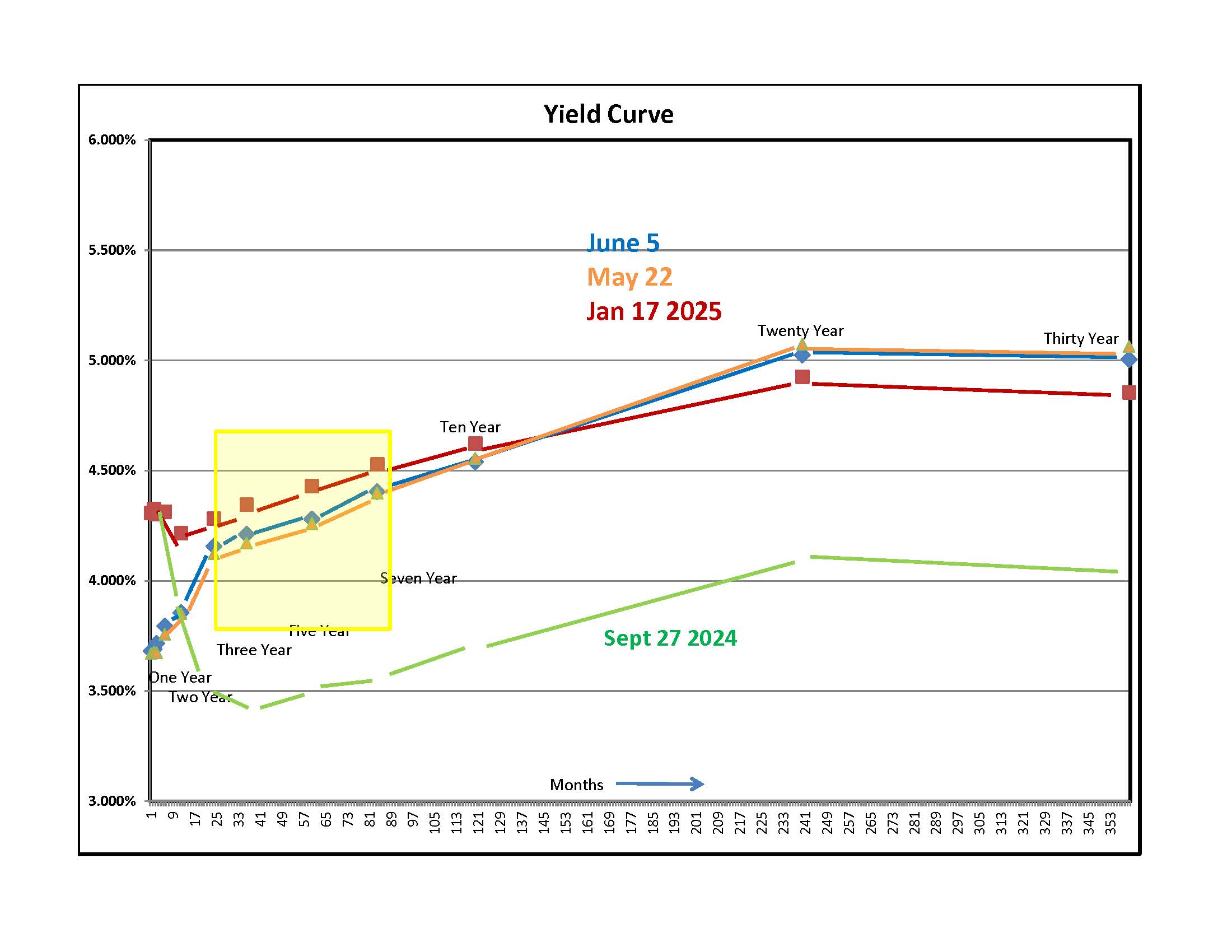
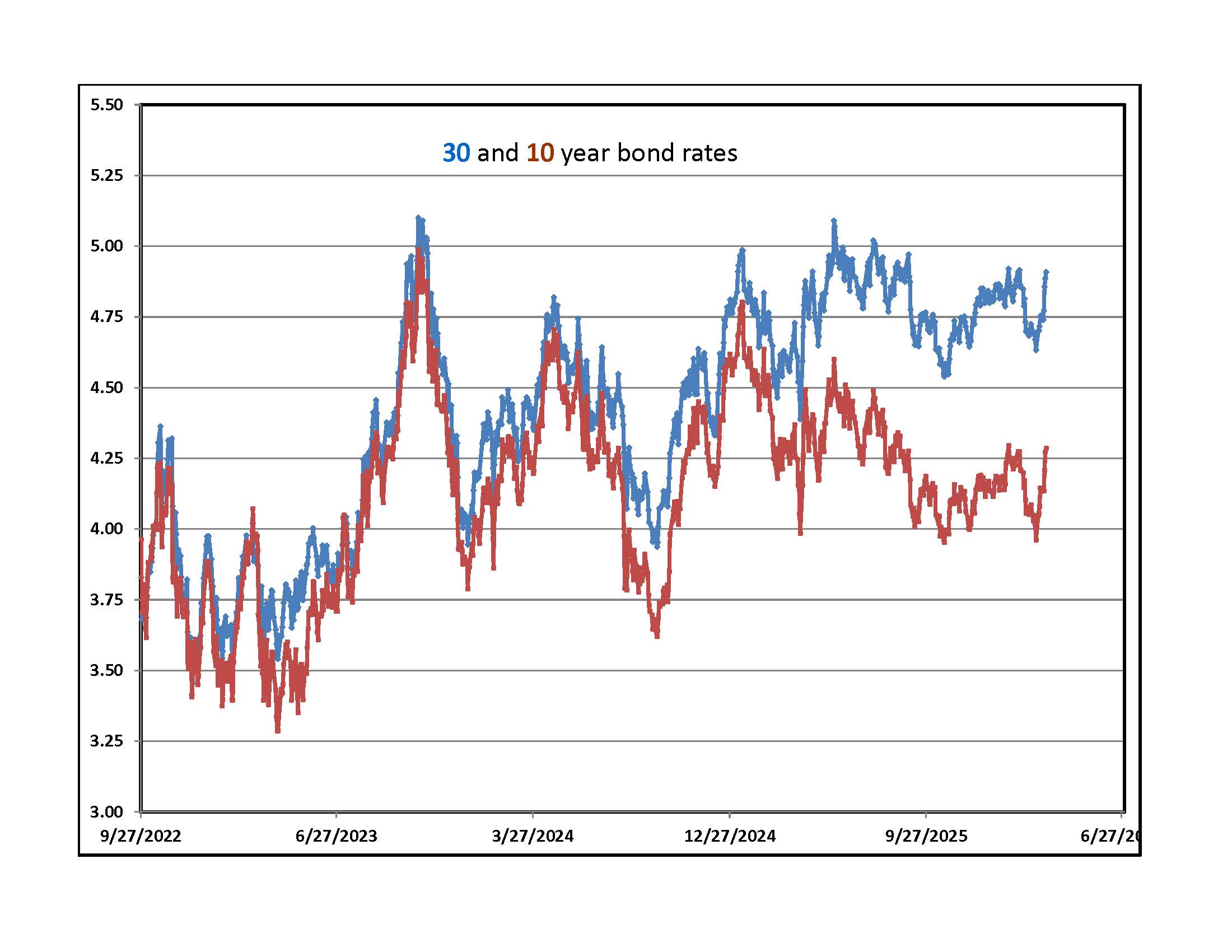
The blue line on the left side graph shows how the U.S. government debt yield curve finished the week. A month ago, I wrote that the hysteria in the financial media over higher interest rates was similar to what was seen at other market highs or lows. Two weeks ago, I drew the blue lines on the 10 Year Note chart as an idealized pattern following the a,b,c,d,e. We got the sell-off with lower rates last week. It could be that we saw the high and rates have topped for now. Why did the bond market have a violent rally? We saw a flight to safety amid the Tech melt down. Hedge funds had record short positions in Treasury Note and Bond futures and cut their losses by buying. There is talk that the Treasury will reduce the amount of longer dated bonds in future auctions. Also, T Notes and Bonds are the preferred collateral for short term borrowing and this is an inelastic demand. On Friday, I had live graphs of both bond futures and SMH on one of my computers. They traded opposite each other so if we get a stock market rebound, bonds will do the opposite. A blue Monday in stocks will prompt more bond buying. I read different analysts and my favorites disagree on the longer term prospects for interest rates. One of them claims that we are entering a period of turbulence for stocks and that the economy is peaking. Investors will seek safety in Treasury bonds just as they have in previous cycles. Others say that continued expanding deficits and wars always bring higher interest rates and any pause is temporary. Both sides present compelling arguments.
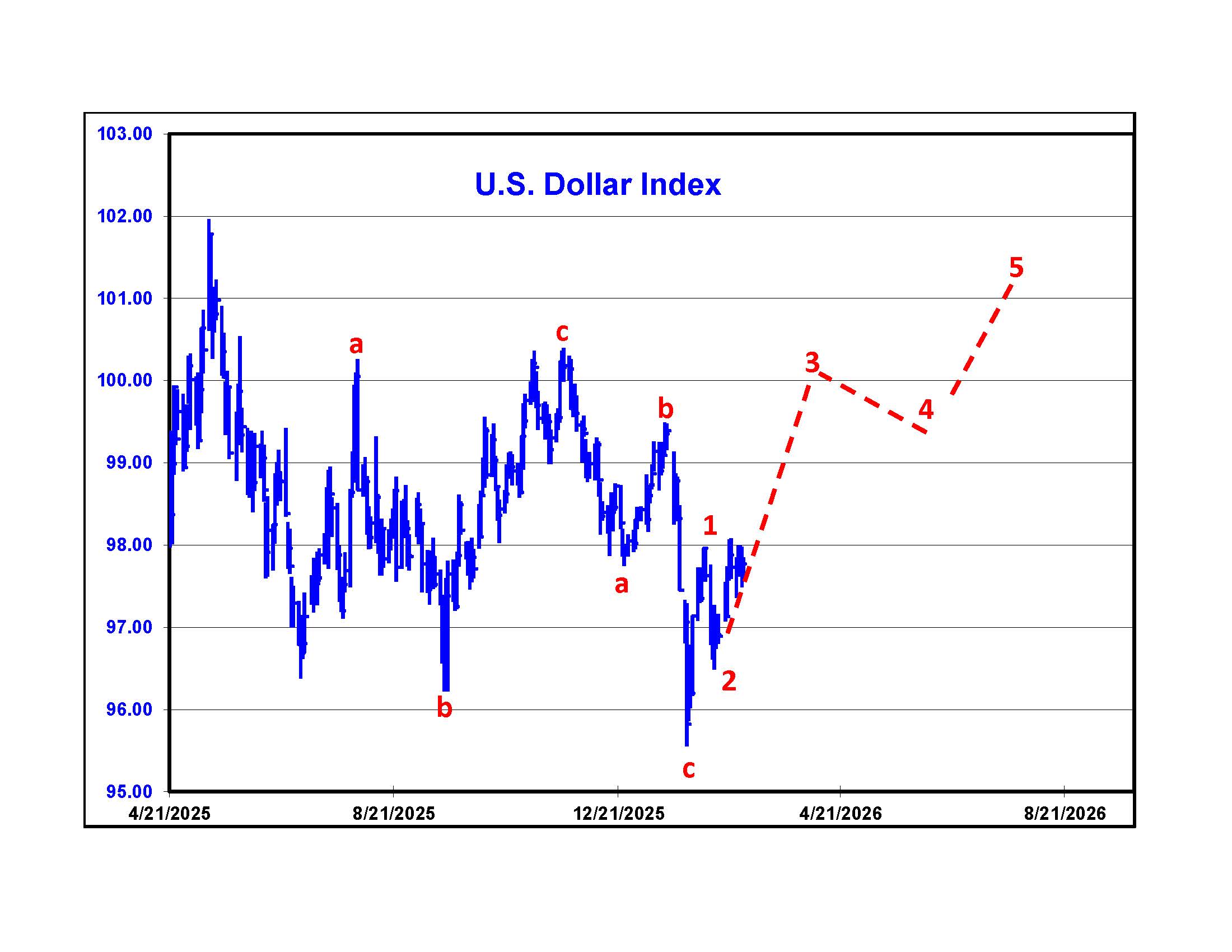
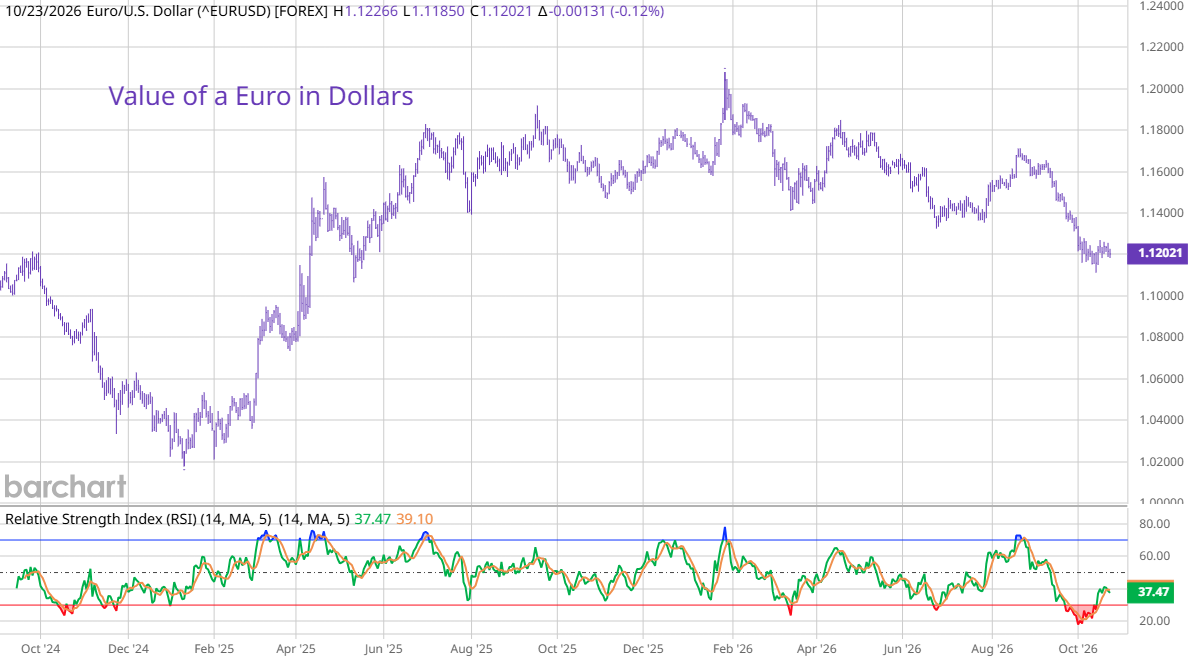
My most respected commentators on currencies are also split on the Dollar. Tom McClellan points out that Commercials, futures traders who are hedging exposure, have big short positions in the Dollar Index futures and long positions in other currencies. In the past, this led to a sell-off in the Dollar. Others say that Europe is imploding. Immigrant riots and structural deficits will eventually lead to a collapse of the European Union and a return to sovereign nations with their own currencies. Most European countries have a history of defaulting on their government debt. This favors the Dollar. Trading currencies is a tough way to make a living.
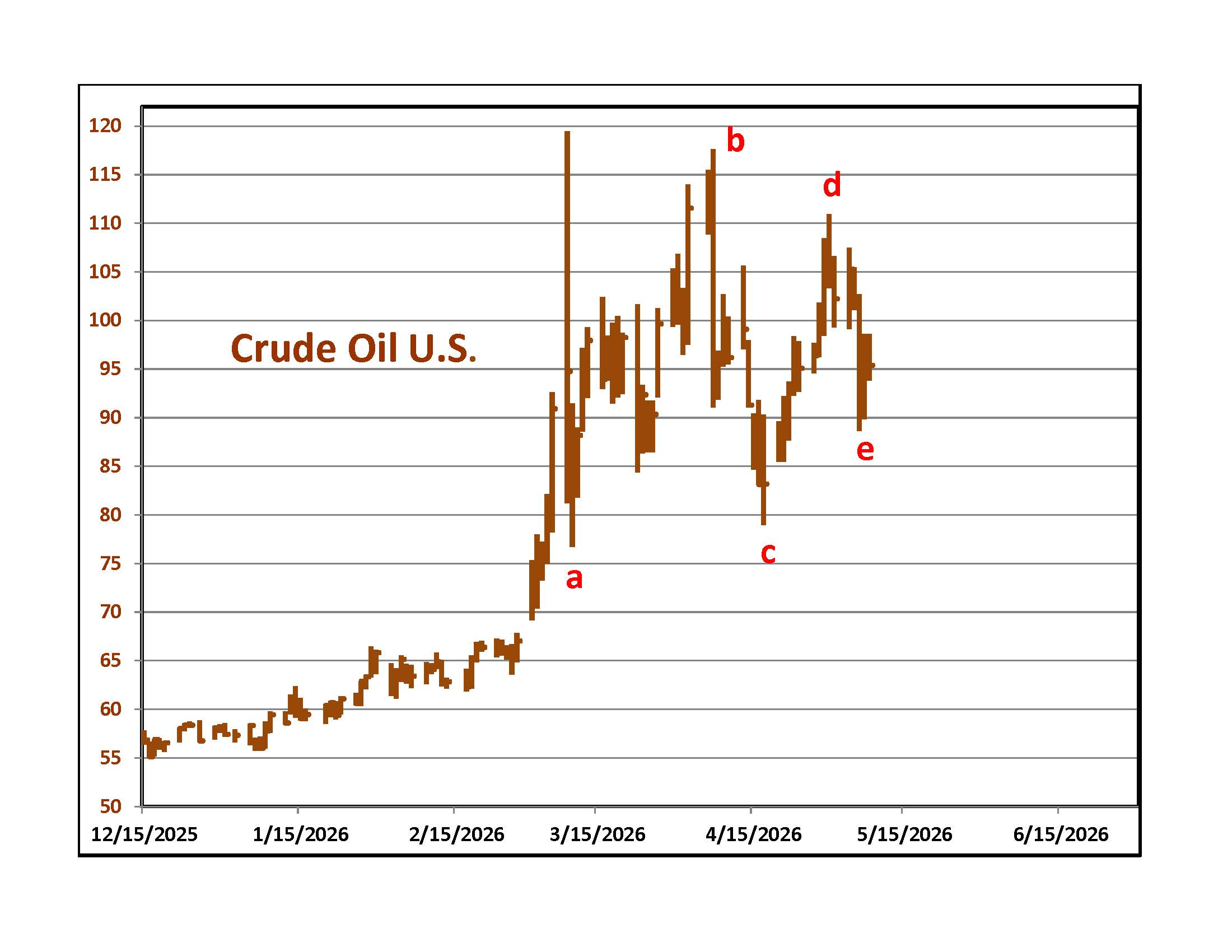
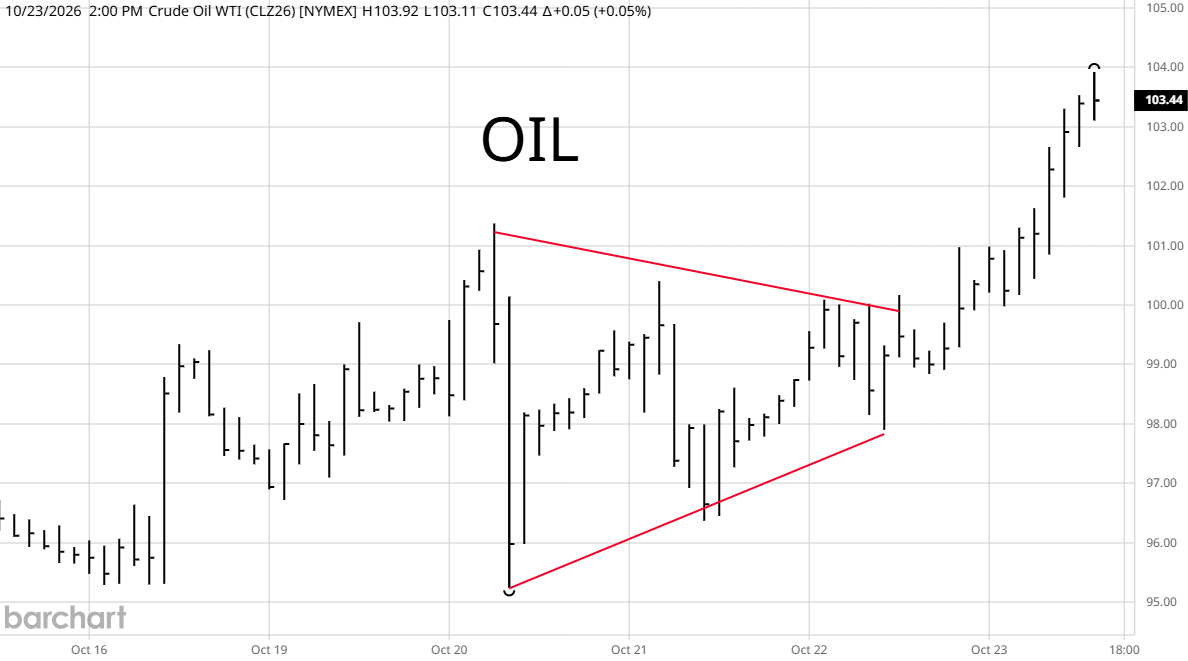
On the left is a graph of daily WTI (domestic) crude oil prices and my favored pattern in blue. Friday's close challenged the upper trend line. Some reports say that more crude is passing through the Strait now than before the war. In the U.S., commercial inventories of crude (aside from the Strategic Reserve) are only 3% below the five year average for this time of the year. The right side chart shows a close-up from last week's trading. Oil could have traced out a contracting triangle (pennant) formation for a final burst higher. When wars are in play, chart-book predictions take a back seat. This morning, as I type there is nothing new crossing the headlines. Iran continued to drone and mine tankers last week and the U.S. is trying to force a deal with Russia that will get exports of diesel flowing again.
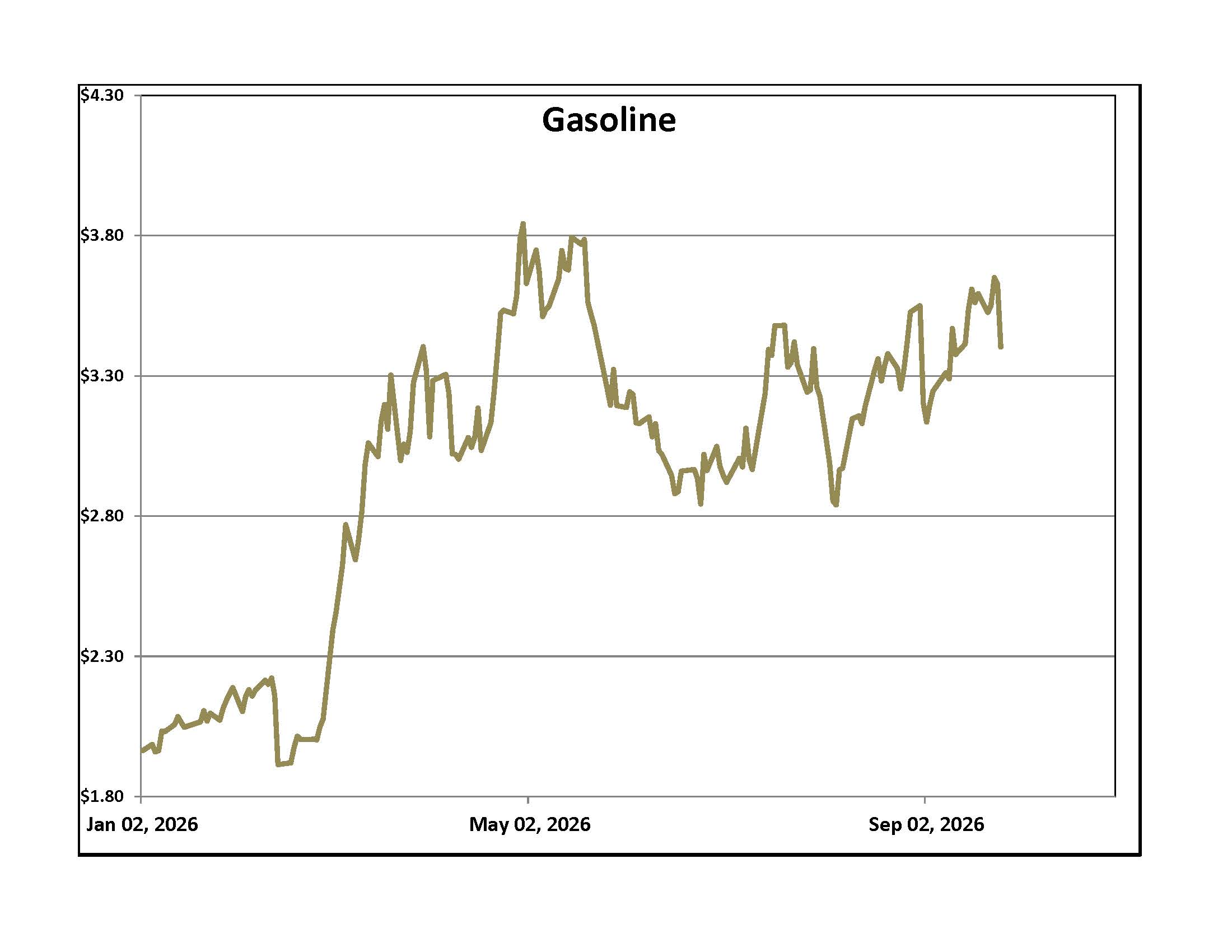
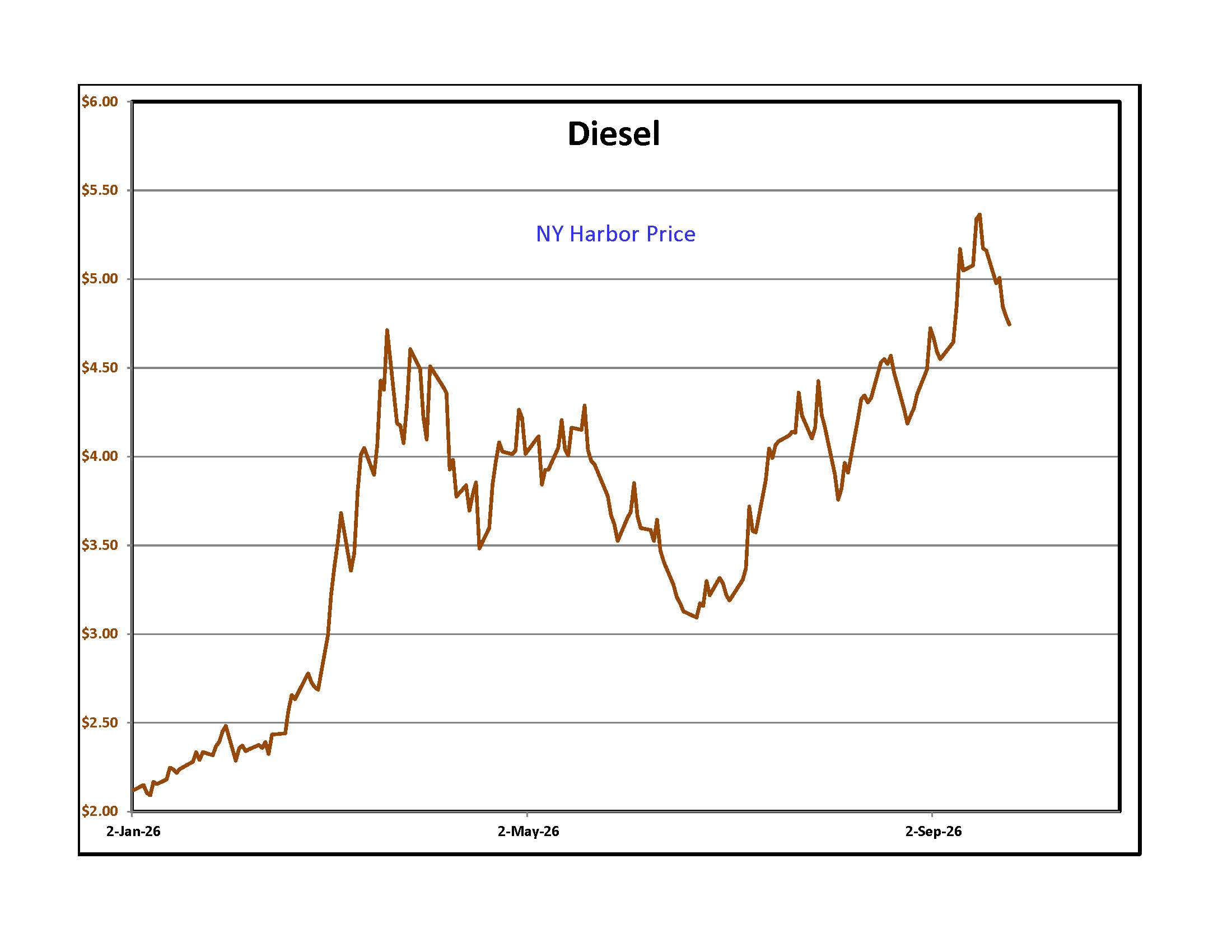
Above are spot prices for gasoline and diesel in NY Harbor. The world needs diesel to move everything, including fall harvesting equipment. Prices backed off a bit at the end of the week amid talks with Russia. Gasoline inventories are 5% below the five year average and diesel is 9% below.
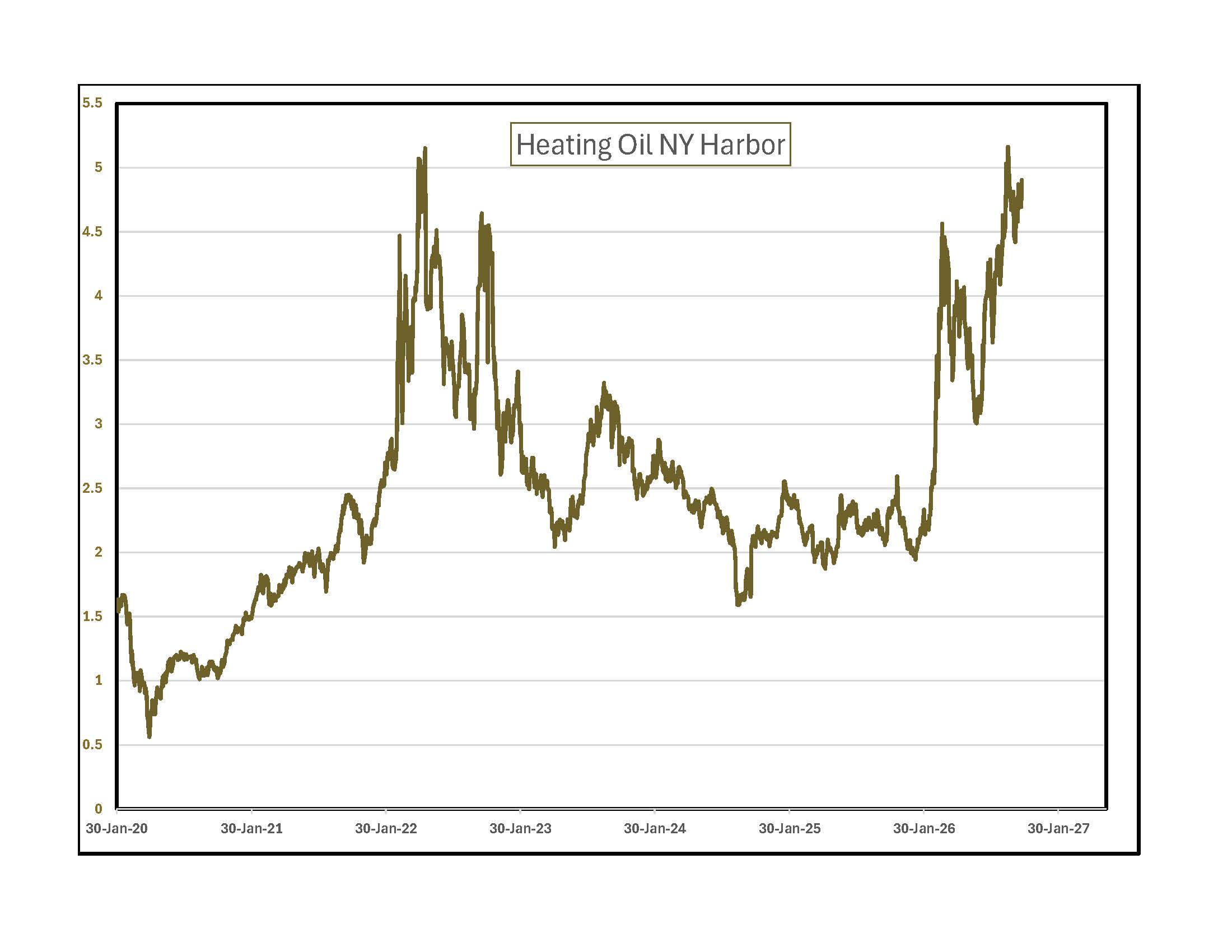
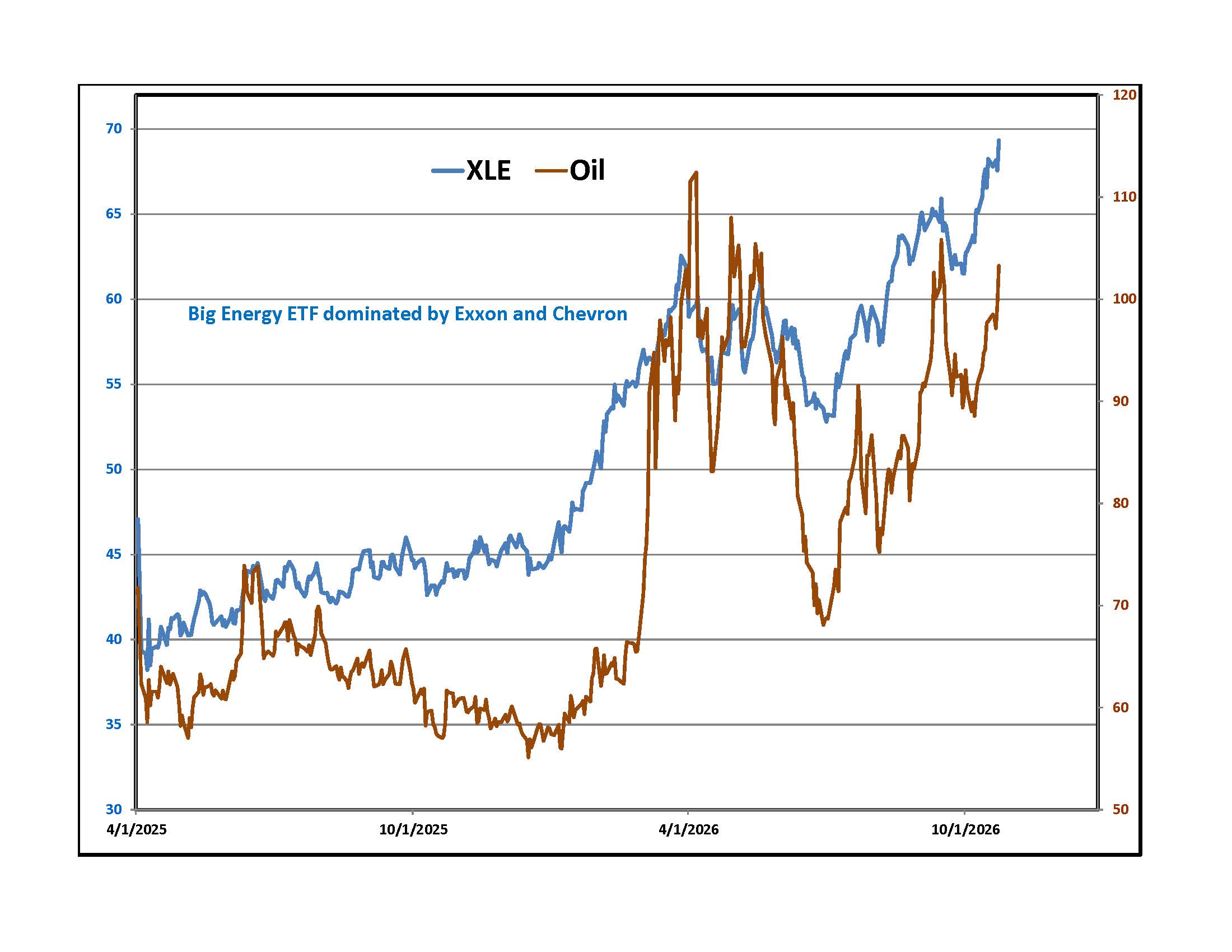
Heating Oil and diesel are pretty much the same so their prices are close. I live in the northeast and we have less heating oil inventory than in previous years. I am paying more for it than I have ever paid in my life. I keep my house like a refrigerator. Before the war in Ukraine, most of our New England heating oil came from Russia. XLE, the big energy ETF made new highs last week, however, traders are nervous. On Thursday, energy stocks sold off strongly on rumors surrounding talks between Russia and the U.S. They recovered on Friday with players anticipating more attacks on tankers in the Gulf and strikes on Russian refineries by Ukraine over the weekend.
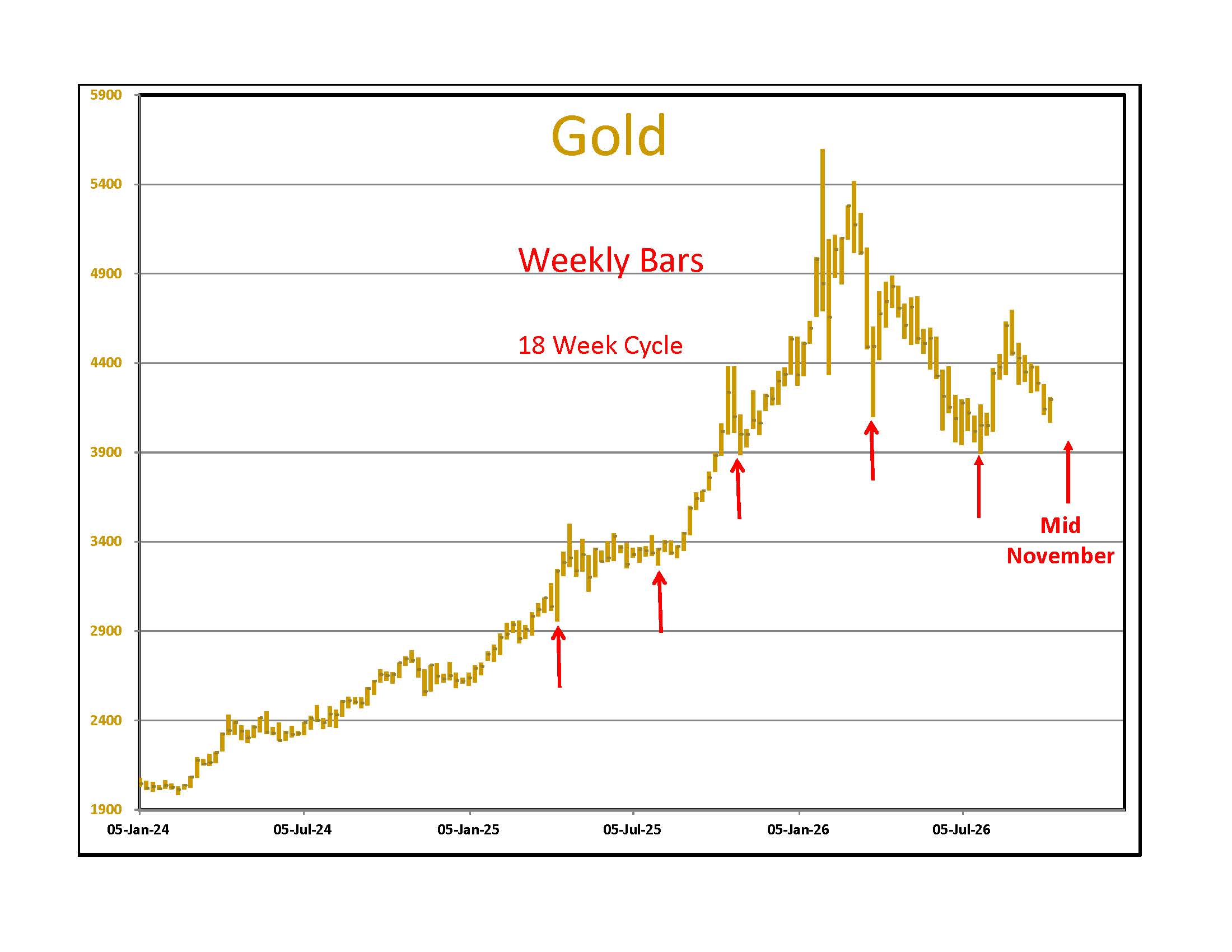
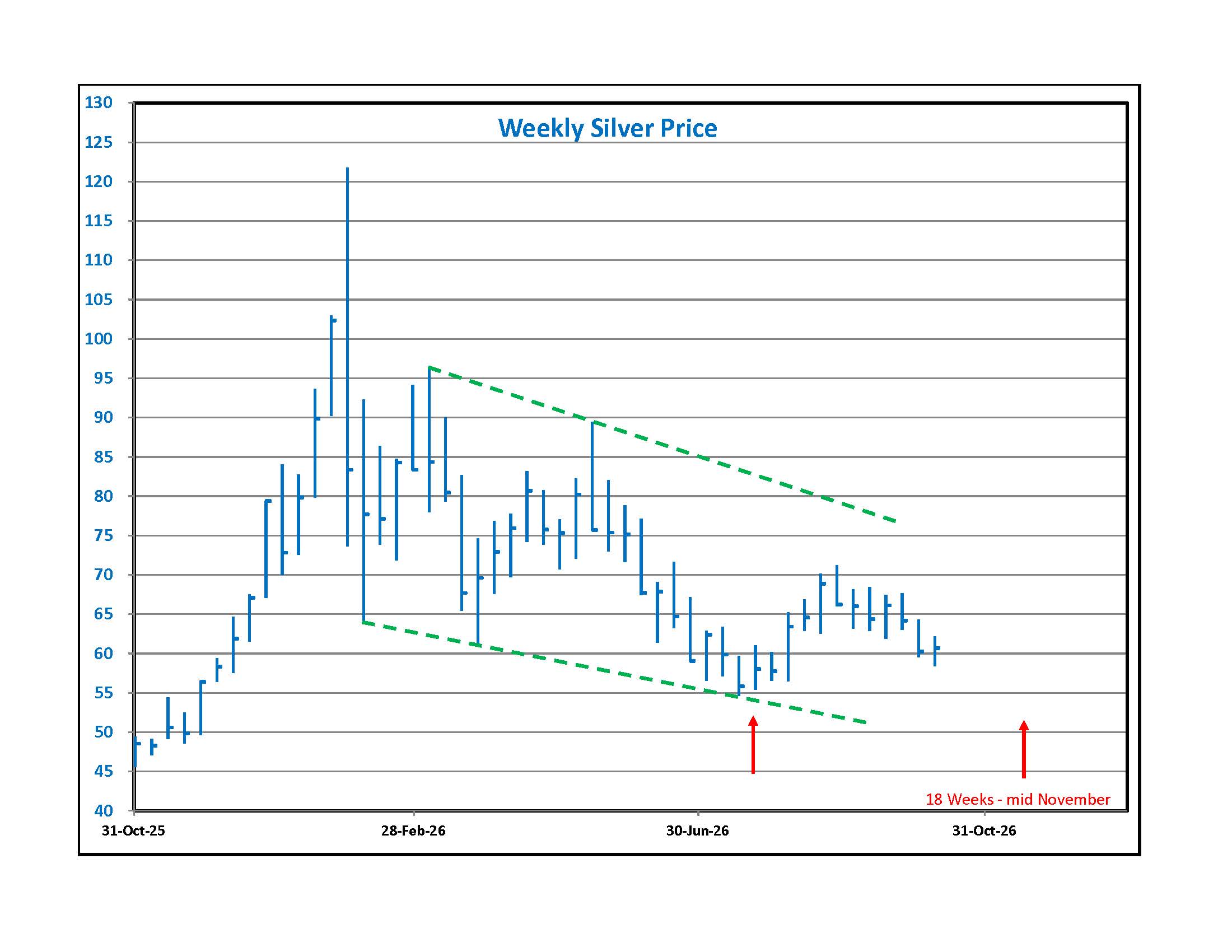
Above is a weekly bar charts of spot gold in NY. Arrows point to Cyclesman.com's theoretical 18 week trading cycle low timing bands. These can contract and expand by a few weeks. The silver graph shows the difference between spot silver prices and their one year moving average in blue. Red ovals mark momentum peaks and green ovals pinpoint downward momentum extremes. The last red oval was way above previous levels and now, we are seeing the same thing on the downside. Part of silver's bull market story is its use in solar panels and circuits going into data centers. Recent reports say that Chinese solar panel makers are cutting back on silver usage. The crash in AI stocks last week doesn't help the data center argument.
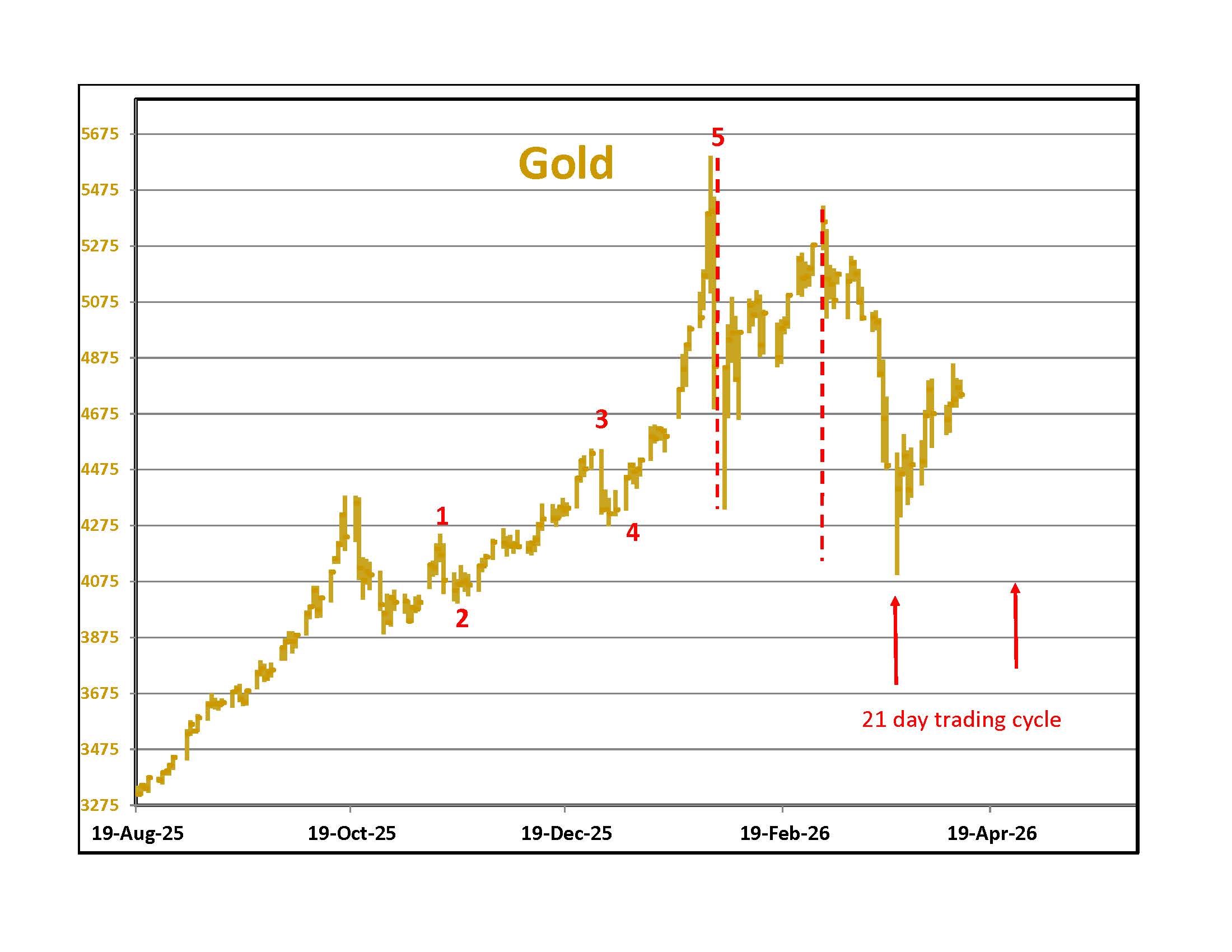
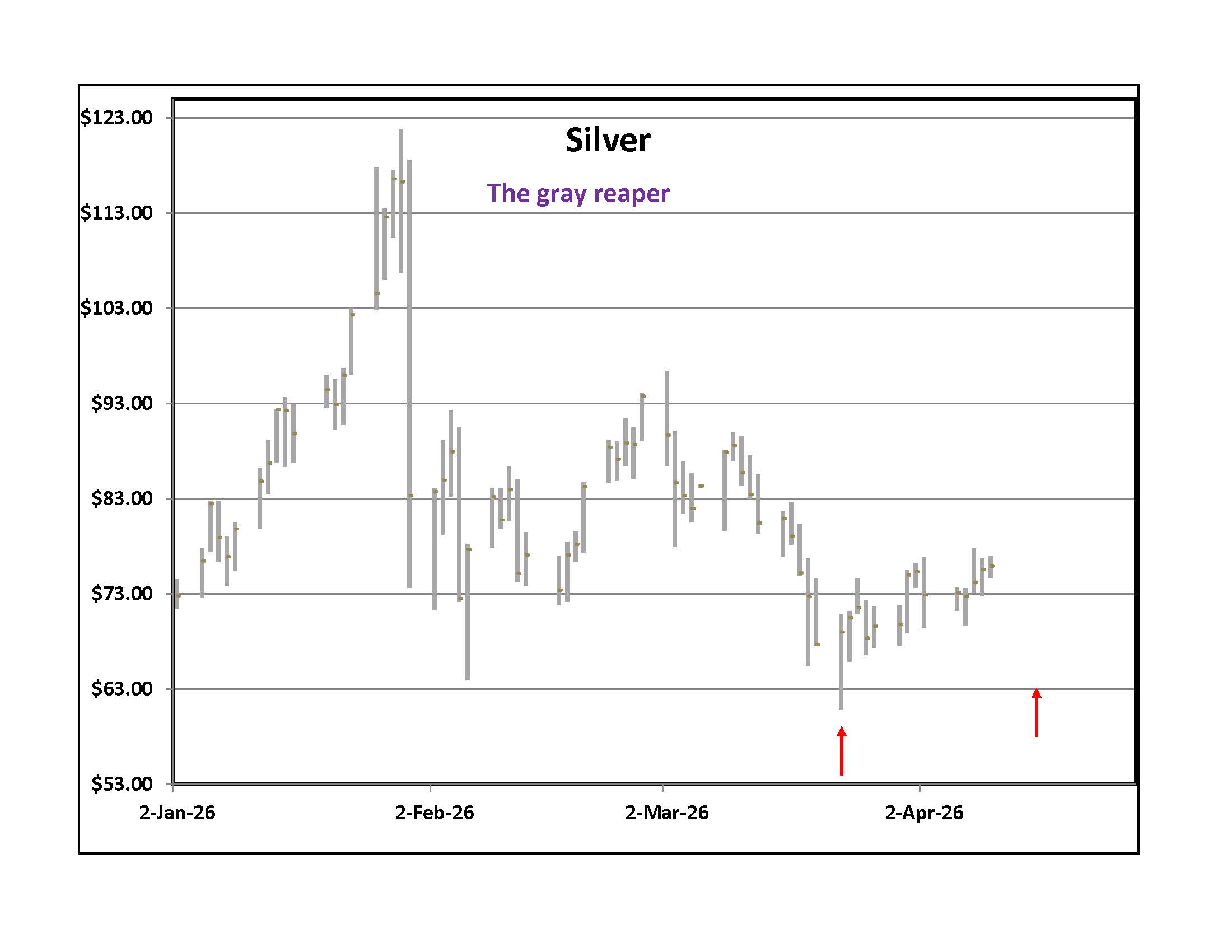
Above are daily bar charts of the metals. So, exactly how do gold and silver work as hedges or diversification from stocks? Lately, it is all the same trade. If stocks bounce next week, gold and silver will probably join them. One of Cyclesman.com's 21 trading day timing bands is due the first week of November.
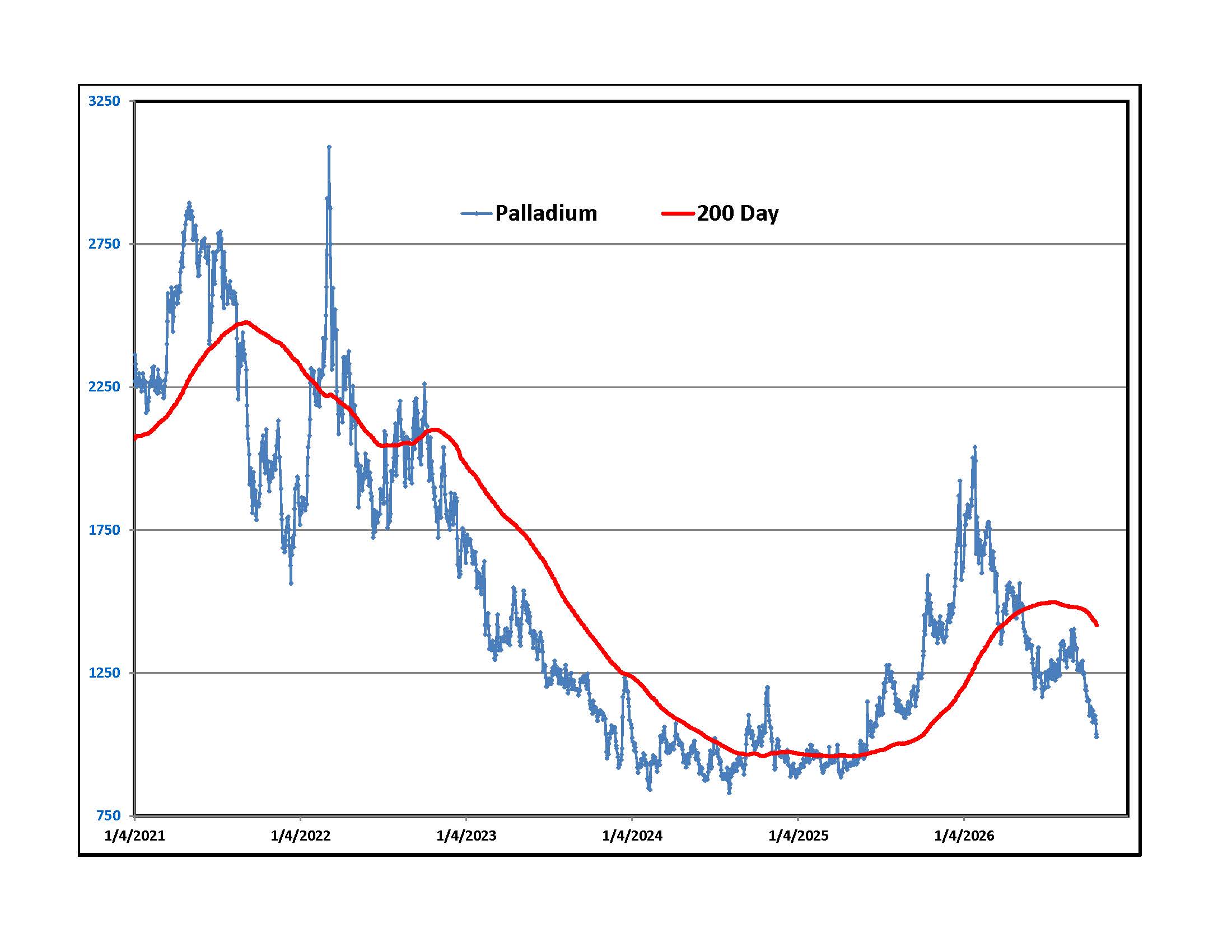
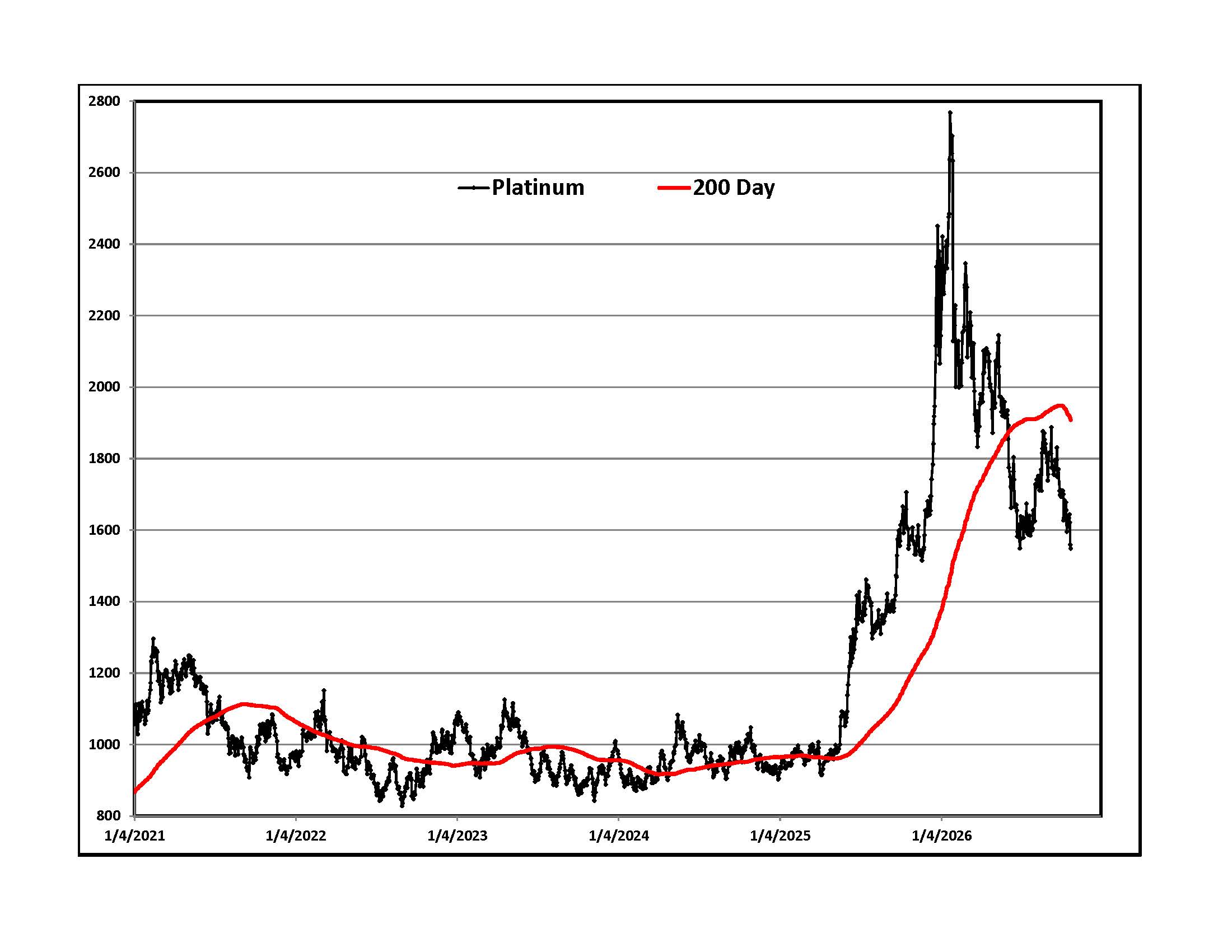
Palladium and Platinum are getting stretched to the downside just in time for their traditional seasonal lows. Industrial metals do not do well when stocks are having a bad week because traders assume that the stock market knows something about the future of the economy. If I needed these metals for my business, I would start nibbling at them.
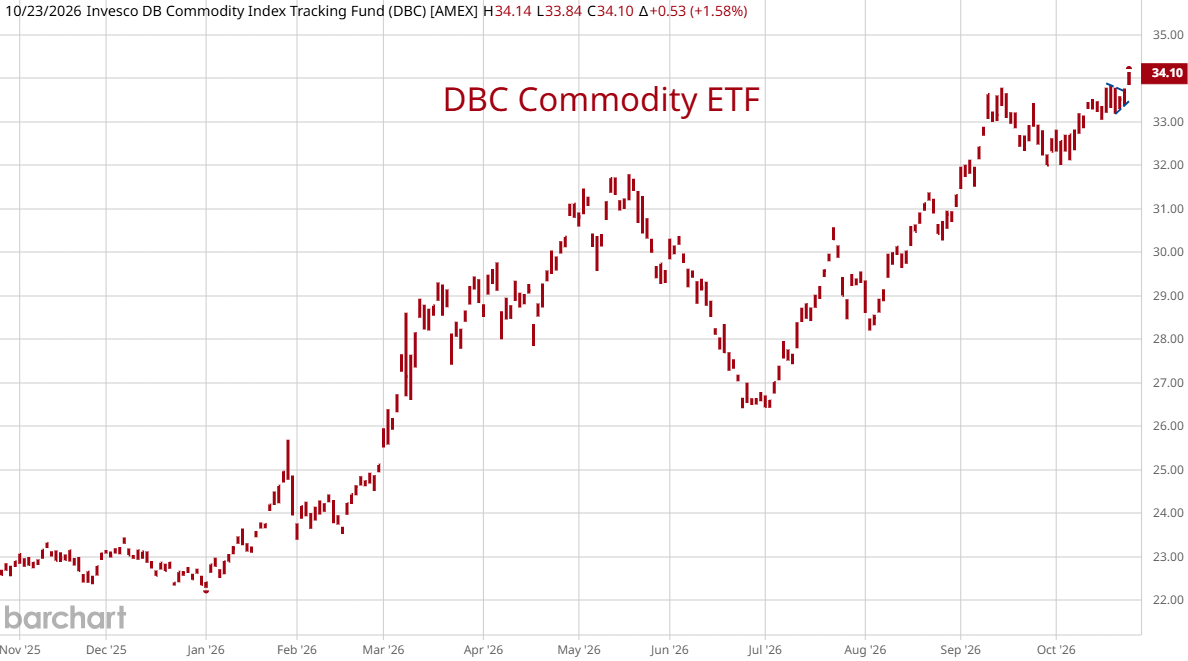
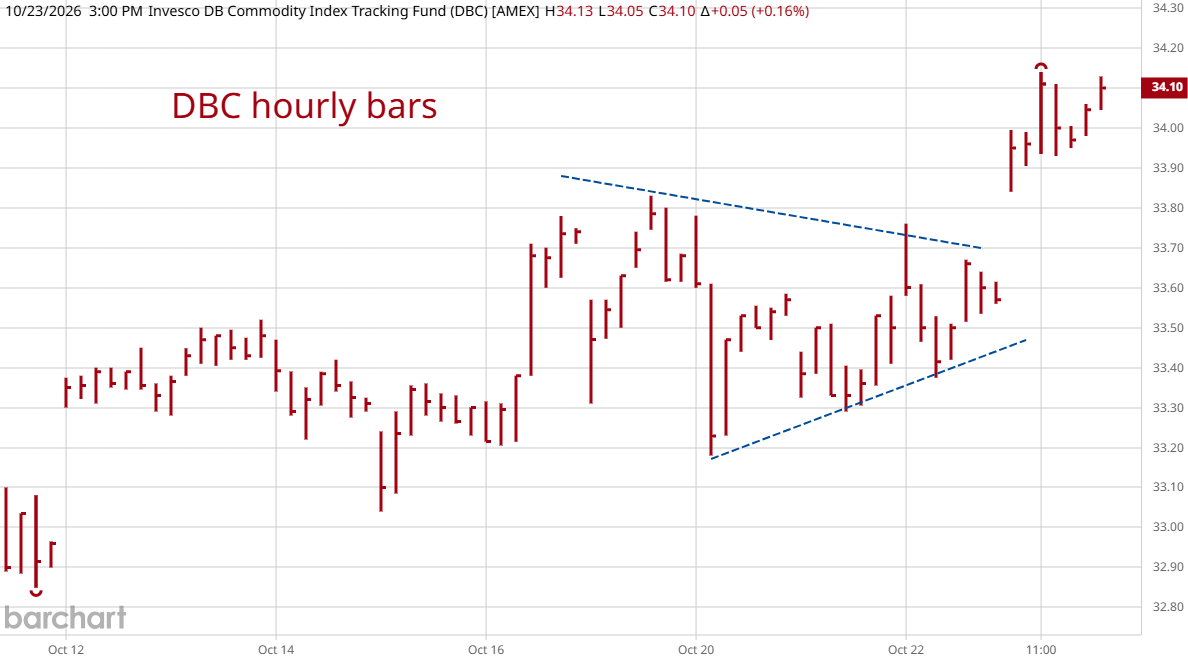
Above are charts of DBC, the popular ETF that tracks a basket of commodities. One of this year's investing themes is that the world needs to catch up on producing basic commodities. We are in a period of fiscal dominance where governments are running huge deficits and pumping money into the economy. This increases the demand for real things, as opposed to paper assets. In this environment, commodities will thrive. On the upper right is an hourly bar chart of DBC. Just like oil, it made a small contracting triangle and burst to new highs. The chart-book says that this is a toping formation.
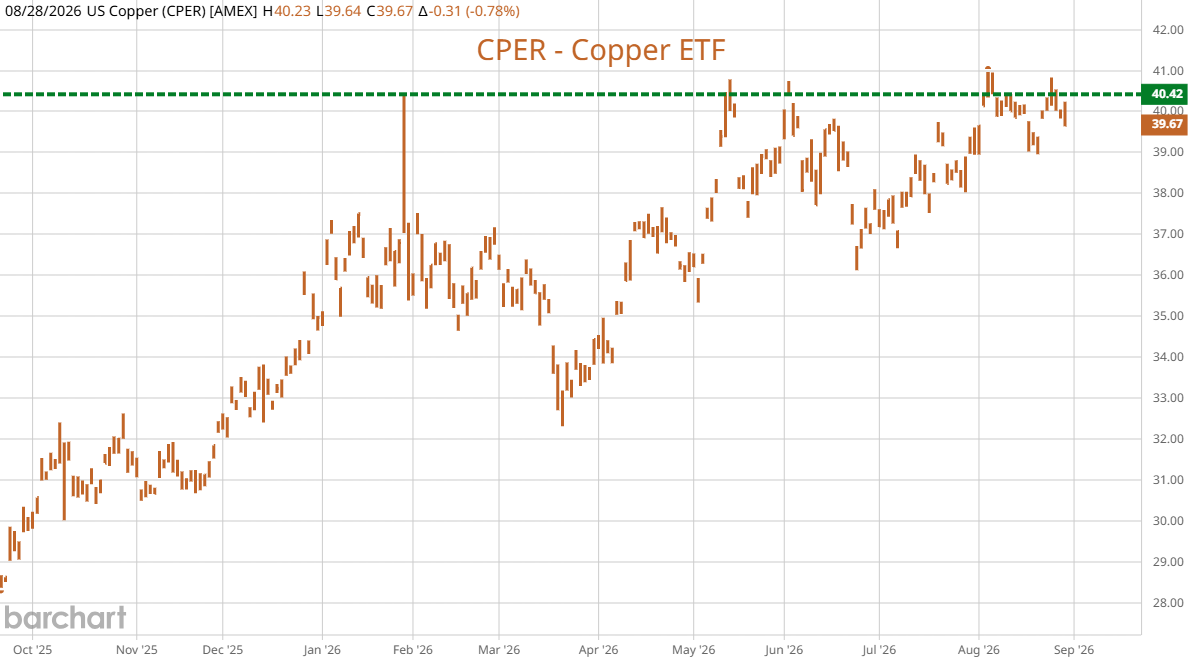
Directly to the right is CPER, an ETF that tracks copper prices. I read multiple articles each week that give a careful analysis of copper's supply and demand situation. The conclusion of every one is that copper "has to" go much higher. Last week there was talk about a strike in Chile. I have been reading these articles for over a year. Then, I look at the daily graph of CPER and see that copper has gone nowhere for a while. Will we get a final thrust or a break to the downside as the AI story fades and the economy slows?
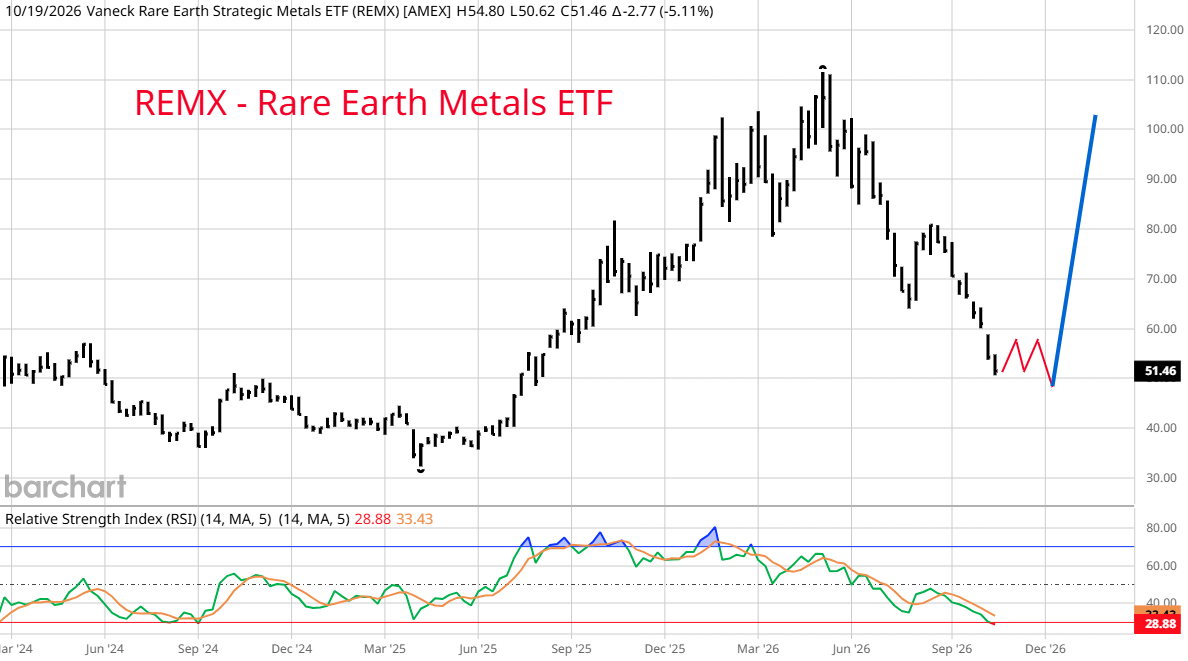
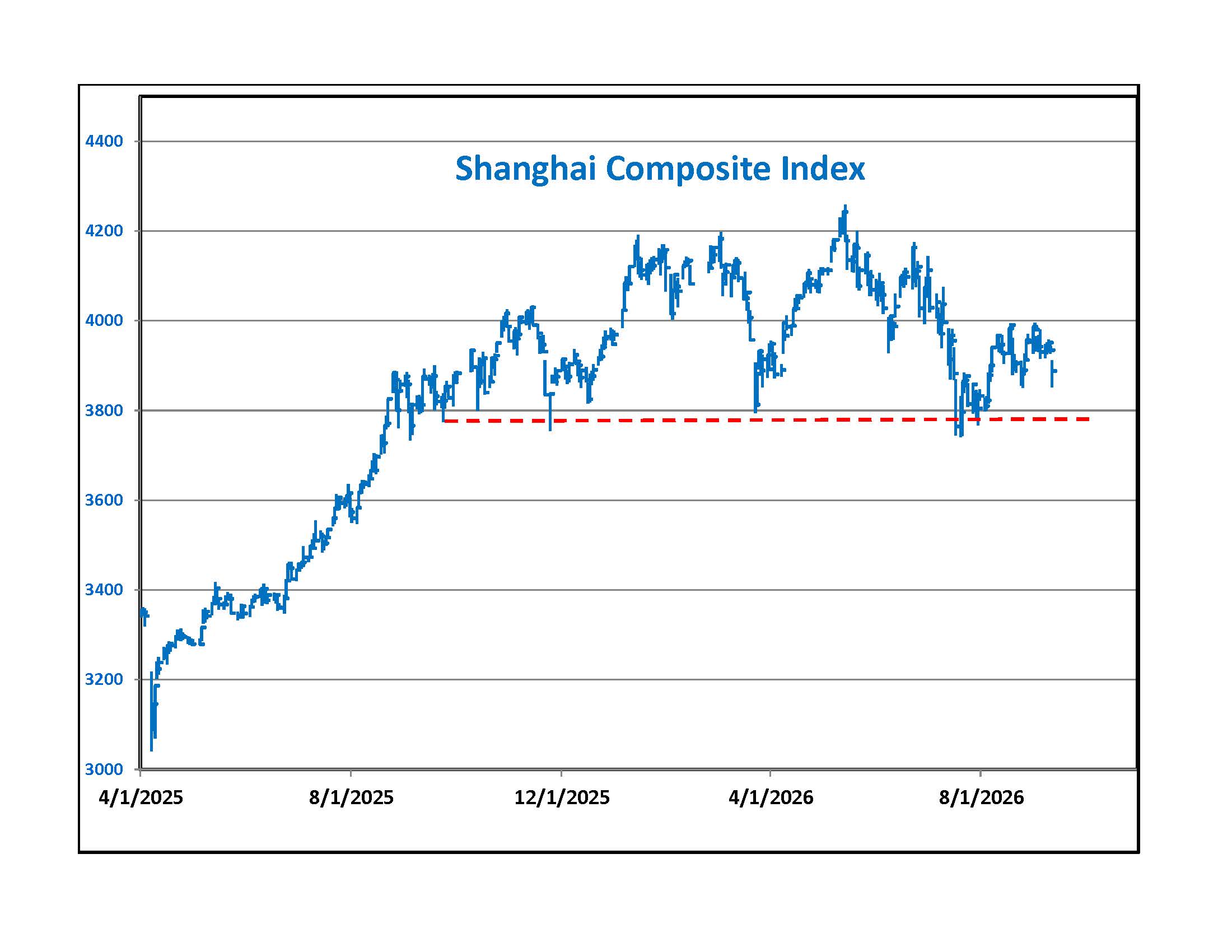
On the left is a graph of REMX, an ETF of rare earth miners. The prices for rare earths is still high with China restricting exports. We have a big meeting with China coming up and any increase in exports will reduce the viability of U.S. mining startups. Our military equipment depends on rare earths. Why would China export more and help us build more cruise missiles? On the right is the China Shanghai Composite Index with a simple Relative Strength Index momentum oscillator below. It is impossible to know if history will repeat, but when it fell below 20 in the past, a few months later, those brave enough to buy, made money.
Best Guesses:
Stocks - Last time, I was hoping for some big down days in AI and tech that would set the rest of the market up for a rally. We got it last week! If we live past Monday morning, I expect a bounce. After reviewing my charts, I have doubts about the bullish themes involving seasonality and the mid-term election year cycle. The mid-cap chart might be the most realistic. It would look best with a short term bounce, one last sell off to new lows then a rally that takes months, but only retraces half to two thirds of the initial decline. Given the big "either or" potential volatility, I am still holding a lot of cash and keeping positions small.
Bonds - We got a great short-covering rally. If stocks recover, bonds should sell off a bit. Do bond traders sniff an economic slowdown?
Gold and Silver - Last time I thought we would get a bounce followed by another sell off into the second half of October. Gold and silver are following stocks for now so I am looking for a bounce, another soft phase and a better rally starting in November or early December.
Oil - Let's see who bombs who this weekend. The charts alone are hinting at a short-term top.
Other Commodities - If the AI story fades, so will the commodities story.
Real Estate - I am starting a Best Guesses for Real Estate because I think we are close to a turning point in the number of transactions, driven by lower prices as opposed to lower mortgage rates. In many cities, rents are dropping and the gap between rental costs and home ownership costs is getting wider. Historically, this is followed by lower home prices. A lot of owners would like to sell and with many houses owned by boomers who need to downsize, there is a naturally increasing supply. Once, "falling prices" becomes the narrative, older owners will be willing to settle for lower prices.
Best of luck,
DBE